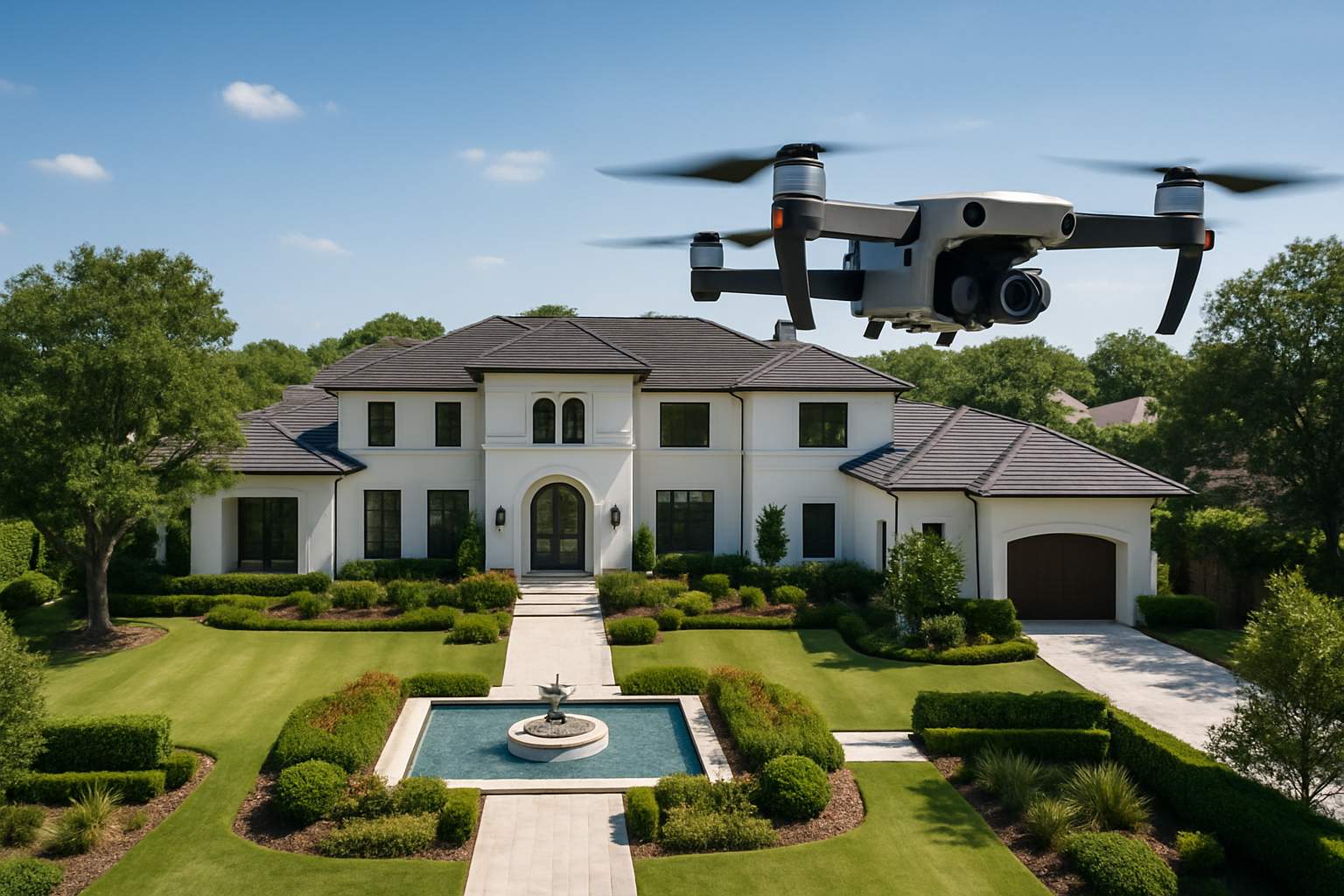
Compare Luxury Estate Security Plans: The Definitive High-End Protection Guide
The architecture of ultra-prime residential defense has evolved far beyond standard commercial alarms or reactive neighborhood patrols. When high-net-worth principals, family offices, and prominent individuals evaluate residential safety, the mandate requires an intricate synthesis of physical hardening, intelligent automation, and continuous human oversight. Across premier domestic and international holdings, safeguarding large-scale properties demands balancing uncompromising discretion with robust structural deterrence.
Evaluating high-end protective strategies requires moving past generic security marketing or superficial equipment checklists. A property outfitted with expensive high-definition cameras can fail during a targeted intrusion if the underlying network lacks segmentation, if perimeter sensors trigger excessive false alarms, or if response protocols are disjointed. Conversely, elite protective programs operate as unified ecosystems, orchestrating multi-tiered physical boundaries, biometric access controls, and hardened digital frameworks to neutralize threats before they reach the main residential structure.
This analysis examines the structural mechanics, historical evolution, and practical realities governing high-level domestic protection. By looking past surface-level vendor narratives, we map out the operational frameworks that separate ordinary home security from true flagship estate defense, offering a comprehensive reference for professionals who view residential protection as a critical investment in family safety and asset continuity.
Understanding “compare luxury estate security plans.”
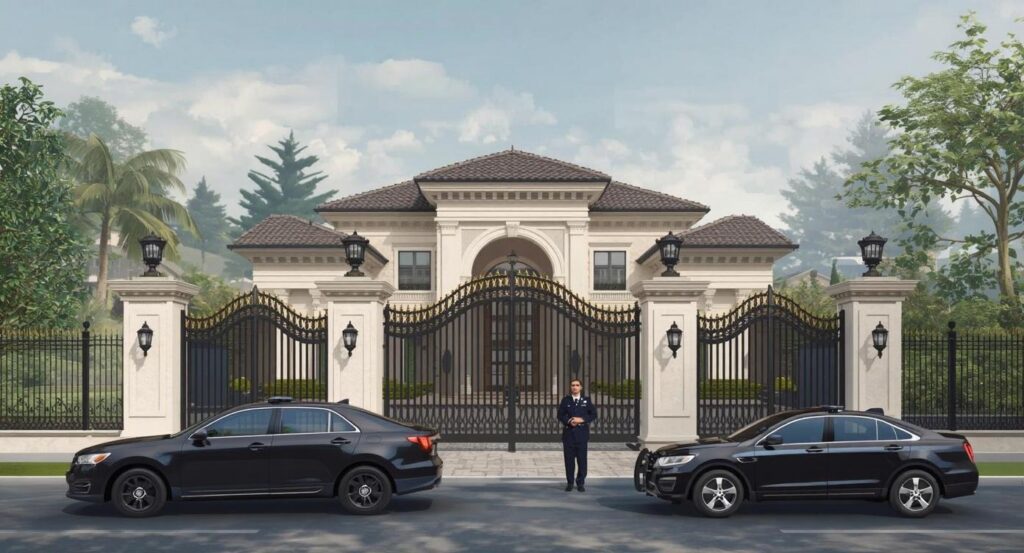
The phrase compare luxury estate security plans evokes a familiar image of security control rooms, perimeter laser grids, and round-the-clock guards monitoring sprawling compounds. Yet, dissecting this concept reveals a highly complex operational landscape shaped by municipal building codes, local law enforcement response agreements, advanced cybersecurity vulnerabilities, and distinct architectural requirements. A common misunderstanding assumes that purchasing the most expensive off-the-shelf security package guarantees absolute safety. In practice, generic high-end security systems often fail to account for the unique topographical, structural, and behavioral nuances of individual high-value estates.
Oversimplification also plagues how family offices and estate managers evaluate protective proposals, often reducing decisions to camera resolutions, sensor counts, or monthly monitoring fees. While technical specifications matter, modern estate defense requires evaluating how physical barriers, artificial intelligence analytics, cybersecurity firewalls, and physical security personnel integrate into a single cohesive architecture. Furthermore, regional environmental factors and local emergency response delays introduce variables that casual buyers easily overlook but can severely compromise crisis execution.
Recognizing these operational nuances prevents costly misalignments between a security proposal’s marketing claims and its actual systemic performance. Establishing a method to compare luxury estate security plans requires balancing diverse technological demands with uncompromising standards for discretion, reliability, and human response execution.
Deep Contextual Background
The lineage of elite residential security traces back to the fortified compounds and walled estates of historical nobility, where physical isolation, structural masonry, and dedicated guards formed the baseline of defense. Throughout the mid-20th century, modern domestic security transitioned toward early electronic intrusion detection systems, hardwired magnetic door contacts, and basic analog closed-circuit television (CCTV) networks connected to local monitoring stations.
The subsequent digital revolution of the late 20th and early 21st centuries catalyzed a structural transformation. The proliferation of internet-connected sensors, high-definition digital video, and automated access controls shifted security from static intrusion detection to dynamic, software-driven surveillance. However, this technological leap also introduced significant cybersecurity vulnerabilities, transforming residential networks into potential targets for remote espionage and data interception.
In recent years, the convergence of artificial intelligence, biometric authentication, drone monitoring threats, and sophisticated threat intelligence has redefined the industry. Today’s elite security ecosystem represents a mature synthesis of military-grade physical hardening, advanced data encryption, and discreet hospitality-aligned personnel management, marking a profound evolution from the simple alarm systems of the past.
Conceptual Frameworks and Mental Models
Navigating the landscape of top-tier residential protection requires structured analytical tools rather than intuitive guesswork. Several mental models help decision-makers evaluate prospective security proposals against strategic objectives.
1. The Concentric Defense Ring Model
This framework structures estate protection into expanding concentric zones: the outer perimeter, the intermediate grounds, the building envelope, and the inner sanctuary. Effective security plans ensure that each ring provides active deterrence, early detection, and delayed intrusion, preventing threats from reaching the principal’s immediate living quarters without prior intervention.
2. The Technology-Human Equilibrium Matrix
Security cannot rely exclusively on automated technology or passive human guards. This model evaluates protective plans based on how effectively they balance AI-driven threat detection and automated environmental responses with the calibrated judgment, discretion, and physical intervention of trained security personnel.
3. The Cybersecurity-Physical Convergence Model
Modern estates rely heavily on internet-connected IoT devices, smart locks, and automated lighting. This model analyzes security proposals through a dual lens, ensuring that physical access points are matched by rigorous network segmentation and encrypted data transmission channels to prevent remote digital compromise.
| Framework Category | Primary Focus | Main Operational Benefit | Potential Blind Spot |
| Concentric Defense Rings | Multi-tiered perimeter vs. interior safety | Detects and delays threats early in the approach vector | Can create visual clutter if landscaping is ignored |
| Technology-Human Equilibrium | Automation vs. guard intervention | Combines rapid machine detection with human judgment | High ongoing operational cost for personnel |
| Cyber-Physical Convergence | Network security vs. hardware integrity | Secures smart infrastructure against remote hacking | Requires continuous software maintenance |
Key Categories or Variations
Elite residential security plans span multiple distinct strategic typologies, each carrying inherent operational and architectural trade-offs.
-
The High-Tech Automated Fortress: Prioritizes cutting-edge artificial intelligence analytics, thermal imaging, biometric access portals, and integrated smart-home automation. While offering lightning-fast automated detection and remote smartphone control, it remains vulnerable to power interruptions and sophisticated cyber-attacks if network hardening is neglected.
-
The High-Personnel Discretionary Model: Centers on a permanent, highly trained on-site security detail, physical patrols, and meticulous access vetting. It provides unmatched human judgment and immediate physical response capability, though ongoing staffing costs and management overhead are substantial.
-
The Structural Hardening Paradigm: Focuses on physical architecture, including ballistic glass, reinforced panic rooms, anti-ram perimeter walls, and heavy-duty steel entry portals. It offers supreme resistance against forced entry and civil unrest, but can alter the aesthetic feel of the property if not integrated seamlessly.
-
The Remote Monitoring and Rapid Response Plan: Relies on off-site command centers monitoring high-definition CCTV arrays and automated sensor alarms, dispatching private tactical teams upon alert confirmation. It reduces daily on-site staff presence, though response times depend heavily on local traffic and geographic isolation.
When analyzing options to compare luxury estate security plans, estate owners and family offices must weigh these categories against specific geographic risk profiles and architectural constraints.
| Category | Primary Advantage | Main Vulnerability | Best Suited For |
| High-Tech Automated Fortress | Rapid AI detection; remote monitoring | Cyber vulnerabilities; power dependency | Tech-forward estates, urban penthouses |
| High-Personnel Model | Immediate human intervention; discretion | Substantial ongoing labor overhead | Ultra-high-net-worth multi-acre compounds |
| Structural Hardening | Supreme physical break-in resistance | High construction cost; aesthetic impact | High-risk geopolitical regions, secluded estates |
| Remote Monitoring Plan | Lower daily on-site footprint | Reliance on external tactical dispatch times | Secondary homes, seasonal properties |
| Integrated Ecosystem | Ultimate multi-layered defense | Complex implementation and cost | Primary residences of high-profile principals |
Realistic Decision Logic
Selecting among these categories requires a diagnostic evaluation of the estate’s physical location and the principal’s public visibility profile. If a property is situated in a secluded rural enclave with long emergency response times, a combination of structural hardening and a dedicated on-site security presence is essential. Conversely, if the property is a secure penthouse within a managed urban tower, an automated high-tech ecosystem paired with building concierge security provides optimal efficiency.
Detailed Real-World Scenarios
To examine how these security plans function in practice, consider the following operational scenarios across different estate contexts.
Scenario A: Perimeter Intrusion Attempt at a Secluded Mountain Estate
-
Context: An unauthorized individual attempts to breach the outer perimeter of a gated 50-acre mountain compound during a severe winter storm.
-
Constraints: Low visibility, heavy snow accumulation blinding standard cameras, and remote local police response times exceeding thirty minutes.
-
Decision Path: The estate’s integrated thermal-imaging cameras and AI-powered ground sensors detect the heat signature and movement vector, immediately alerting the on-site security team and activating localized smart floodlighting.
-
Failure Mode: Relying on standard optical cameras without thermal capabilities, which would be blinded by the heavy snowfall, allowing the intruder to reach the main residence undetected.
-
Second-Order Effect: Multi-sensor integration allows the on-site security detail to intercept the intruder at the intermediate boundary before physical contact with the residence occurs, ensuring total family safety.
Scenario B: Cyber-Enabled Extortion Attempt on an Urban Compound
-
Context: A high-profile executive’s smart home network targeted by a remote threat actor attempting to compromise smart locks and security camera feeds.
-
Constraints: High-volume data transmission, potential exposure of private family schedules, and risk of automated access override.
-
Decision Path: The estate’s IT security architecture, featuring strict network segmentation and dedicated hardware firewalls, isolates the security VLAN from general guest Wi-Fi, neutralizing the lateral movement of the malware.
-
Failure Mode: Running security devices on the same flat home network used for casual guest internet browsing, allowing the attacker to easily infiltrate locks and cameras.
-
Second-Order Effect: Proper network segmentation safeguards digital infrastructure, preserving physical access controls and preventing data extortion.
Planning, Cost, and Resource Dynamics
Executing comprehensive security proposals involves navigating complex financial and logistical variables. Direct costs extend far beyond initial hardware installation, encompassing continuous software licensing, 24/7 monitoring station fees, ongoing maintenance contracts, and security personnel salaries. Indirect costs include the opportunity cost of administrative friction and potential architectural delays during physical retrofitting.
Opportunity costs are particularly high when evaluating protective investments. Choosing a subpar security plan to minimize upfront capital expenditure can result in catastrophic security failures, property loss, or personal harm, dwarfing any initial savings.
| Expense Category | Typical Financial Impact | Primary Cost Drivers |
| Hardware & Installation | 30% – 50% of total budget | Architectural scale, camera resolution, sensor density |
| Personnel & Guard Services | 40% – 60% of ongoing budget | Staff headcounts, 24/7 coverage, specialized tactical training |
| Network & Software Licensing | 5% – 10% of total budget | AI analytics subscriptions, cloud storage, encrypted VLAN upkeep |
| Maintenance & Testing | 5% – 10% of total budget | Scheduled hardware servicing, battery replacements, failover tests |
Tools, Strategies, and Support Systems
Relying on consumer-grade security apps is insufficient for managing elite estate protection. Maintaining operational excellence demands robust technical architecture and dedicated support systems.
-
Centralized Estate Command Dashboards: Integrated software platforms that consolidate CCTV feeds, motion sensors, access logs, and environmental alarms into a single interface.
-
Dedicated Hardware Firewalls and VLANs: Network appliances that isolate security devices from public internet traffic, preventing unauthorized external access.
-
Cellular and Satellite Failover Gateways: Dual-system communication links that automatically maintain monitoring transmission during local fiber cuts or power grid failures.
-
Vetted Security Personnel Agencies: Specialized firms providing rigorously background-checked, bonded, and tactically trained estate guards.
-
Encrypted Mobile Communications Apps: Secure messaging platforms utilized by family members and security staff to coordinate movements without interception risks.
-
Automated Perimeter Deterrence Systems: Programmed lighting, directional acoustic hailing devices, and automated gate locks that react instantly to verified boundary breaches.
Risk Landscape and Failure Modes
Improperly structured or maintained security plans can introduce severe financial, operational, and personal security risks. The primary failure modes include:
-
False Alarm Fatigue: Poorly calibrated motion sensors generating constant false positives from wildlife or weather, causing security staff to ignore genuine intrusion alerts.
-
Single Point of Failure Dependencies: Designing a system dependent on a single internet router or power grid connection, leaving the entire estate blind during a localized outage.
-
Cyber-Physical Vulnerabilities: Integrating unpatched IoT devices into the security network, creating digital backdoors that bypass physical locks and cameras.
-
Insider Threat and Vetting Lapses: Failing to conduct rigorous background checks on contracted security guards or domestic staff, creating internal security vulnerabilities.
-
Aesthetic and Functional Friction: Over-hardening a property to the point where it resembles a prison, severely degrading the family’s quality of life and psychological well-being.
Governance, Maintenance, and Long-Term Adaptation
Maintaining an effective estate security strategy requires ongoing institutional oversight. Family offices and estate managers should establish structured review cycles to audit system performance, test emergency protocols, and update protective technology.
Adjustment triggers should include changes in the principal’s public visibility, shifts in regional crime statistics, architectural renovations, and software vulnerability disclosures. Maintaining an updated security playbook ensures that defense mechanisms remain resilient against evolving threats.
Layered Governance Checklist
-
Annual comprehensive audit of all physical security hardware, cameras, and biometric sensors.
-
Periodic penetration testing of estate network firewalls and smart-home automation security.
-
Continuous monitoring of security guard credentials, background check renewals, and licensing compliance.
-
Regular simulation drills testing panic room access, communication failovers, and emergency responder coordination.
Measurement, Tracking, and Evaluation
Evaluating the success and return on investment of elite security plans requires balancing quantitative technical metrics with qualitative operational readiness indicators.
Quantitative Signals
-
System uptime and network availability metrics ensuring 99.9% operational reliability across cameras and sensors.
-
Alarm response and verification speed measuring how quickly security personnel address detected anomalies.
-
Maintenance ticket resolution velocity tracking the repair time for malfunctioning hardware components.
Qualitative Signals
-
Principal and family feedback regarding the balance between robust protection and daily residential comfort.
-
Security team evaluations regarding blind spot elimination, perimeter clarity, and operational coordination.
Documentation Examples
-
Annual Security Audit Dossier: Comprehensive technical evaluation documenting sensor calibration, network integrity, and hardware lifecycle status.
-
Incident Response Log: Chronological record detailing every alarm trigger, verification step, and resolution outcome.
-
Personnel Compliance Ledger: Secure human resources record verifying background check updates, tactical certifications, and non-disclosure agreements.
Common Misconceptions and Oversimplifications
-
Myth: Purchasing high-end consumer smart cameras provides the same protection as an integrated estate security plan.
Correction: Consumer cameras lack enterprise-grade encryption, sensor integration, and reliable monitoring necessary for high-value estates. -
Myth: A high perimeter wall eliminates the need for electronic surveillance.
Correction: Walls provide physical delay but require motion sensors and CCTV coverage to detect scaling or breaching attempts. -
Myth: Security systems, once installed, operate effectively without ongoing maintenance.
Correction: Complex security ecosystems require continuous firmware updates, battery replacements, and sensor recalibration. -
Myth: On-site security guards replace the need for electronic alarms and access controls.
Correction: Human guards cannot monitor every square foot simultaneously; they rely entirely on electronic sensors and cameras for early threat cueing. -
Myth: Cybersecurity is irrelevant to physical estate security.
Correction: Modern security systems rely heavily on digital networks; a compromised network can disable cameras and unlock doors remotely. -
Myth: Standard local police departments will always arrive instantly during an estate emergency.
Correction: High-value estates are frequently located in suburban or rural areas with extended municipal response times, necessitating private tactical readiness.
Conclusion
Mastering the evaluation and implementation of elite domestic protection requires viewing safety as an integrated, multi-layered discipline rather than a collection of disparate gadgets. When family offices and principals evaluate options to compare luxury estate security plans, success depends on achieving a seamless balance between advanced technological automation, structural physical hardening, and disciplined human oversight. By applying rigorous analytical frameworks rather than relying on superficial marketing claims, estates can establish enduring defensive architectures that safeguard family well-being, protect valuable assets, and ensure long-term peace of mind.