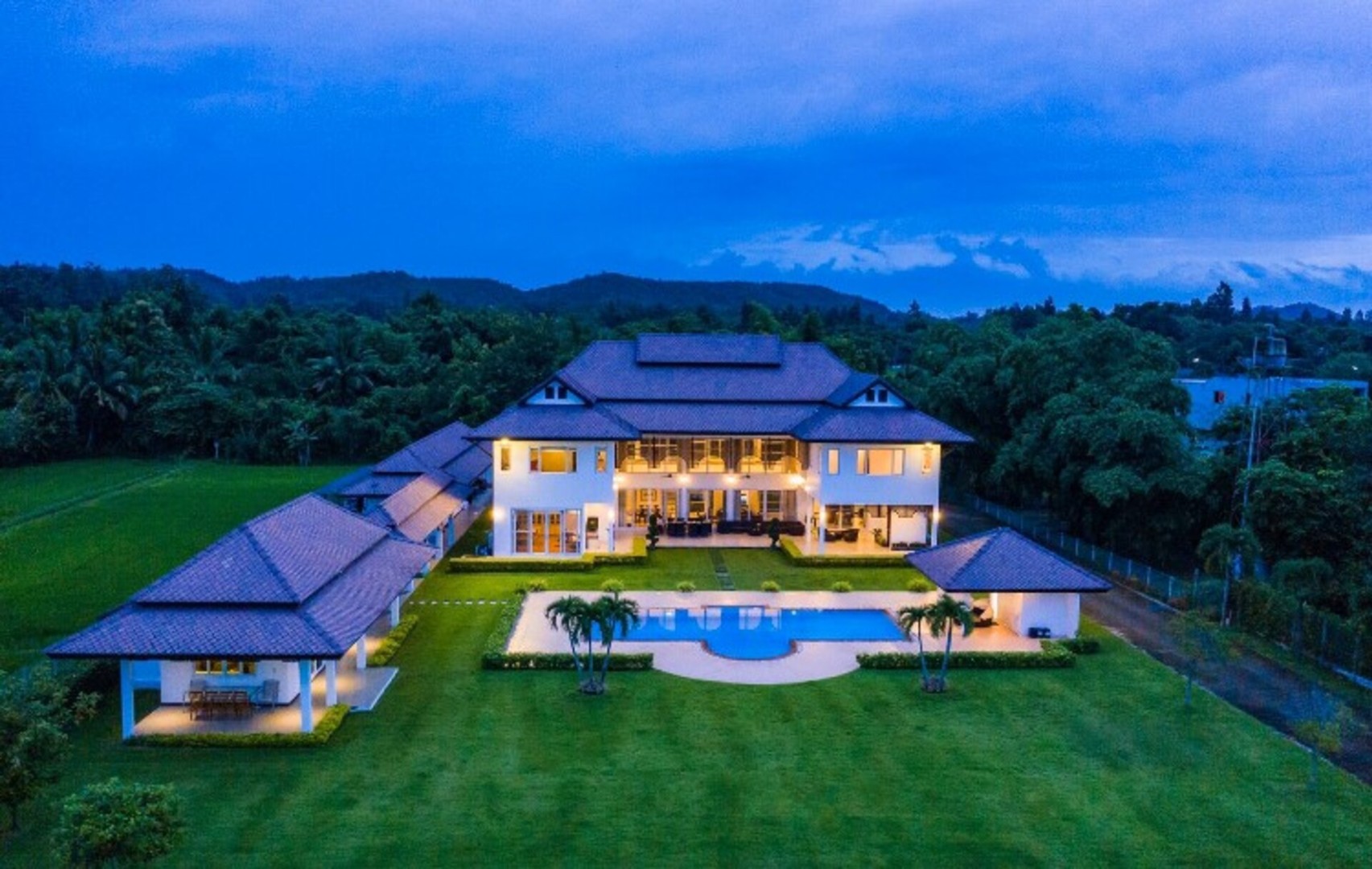
Luxury Estate Overview: The Definitive Ultra-Prime Property Guide
The high-end residential property market operates within a distinct economic stratum detached from standard commercial and suburban real estate cycles. When family offices, institutional investors, and private principals evaluate ultra-prime landholdings, historic manors, and contemporary compounds, conventional valuation metrics fail to capture the underlying asset dynamics. Evaluating these properties requires examining a complex web of structural engineering, municipal zoning intricacies, global wealth migration patterns, and specialized asset management protocols.
Navigating this asset class demands looking past glossy brokerage promotional materials, speculative price appreciation claims, or superficial architectural aesthetics. A multi-million-dollar property celebrated for prime geographic placement or dramatic design can easily become a financial burden if its physical infrastructure suffers from deferred maintenance, its holding structure exposes the owner to heavy tax friction, or its operating overhead outweighs its capital preservation yield. Conversely, portfolios built on disciplined analysis and institutional oversight transform luxury properties into resilient, long-term legacy assets.
This analysis examines the structural mechanics, historical evolution, and practical realities governing ultra-prime residential real estate. By moving past surface-level real estate marketing narratives, we map out the operational frameworks that define elite property holdings, offering a definitive reference for readers seeking a thorough understanding of the space.
Understanding “luxury estate overview.”

The phrase luxury estate overview evokes a familiar image of high-end real estate brochures detailing square footage, marble finishes, and panoramic views. Yet, a rigorous examination of a true luxury estate overview reveals a multi-faceted analytical document that synthesizes macroeconomic indicators, legal holding frameworks, engineering audits, and local municipal zoning laws. A common misunderstanding assumes that evaluating a prime residential asset is simply an extension of purchasing a standard single-family home. In practice, ultra-prime properties function more like commercial enterprises, demanding specialized facility management, robust security infrastructure, and complex corporate or trust ownership vehicles.
Oversimplification also plagues how market observers analyze top-tier properties, often reducing valuation to price-per-square-foot metrics or recent neighborhood transaction comps. While comparable sales provide a baseline, they ignore the idiosyncratic nature of trophy assets, where unique architectural pedigree, historical significance, privacy buffer acreage, and custom mechanical plants create entirely separate pricing tiers. Furthermore, cross-border tax implications, changing environmental regulations, and local zoning variances introduce structural complexities that casual analysts easily overlook.
Recognizing these operational nuances prevents costly misalignments between an asset’s acquisition price and its long-term financial performance. Assembling a proper luxury estate overview requires balancing physical asset evaluation with macroeconomic wealth trends and rigorous legal due diligence.
Deep Contextual Background
The lineage of ultra-prime residential real estate traces back to feudal manors, royal land grants, and historic country estates where property ownership served as the primary instrument of political power, social standing, and dynastic wealth preservation. These early estates were self-sustaining agricultural and administrative centers managed through rigid hereditary laws and dedicated stewards, prioritizing permanence over liquidity.
Throughout the industrial expansion of the 19th and 20th centuries, urban wealth creation shifted focus toward commercial real estate, manufacturing plants, and corporate equities. Elite residential properties transformed from working agricultural manors into suburban retreats, private country clubs, and urban architectural flagships, yet they remained largely governed by informal family networks and boutique brokerages.
The subsequent globalization of capital, the proliferation of modern family offices, and the rise of borderless wealth transformed the luxury residential sector into a recognized institutional asset class. As ultra-high-net-worth individuals began diversifying portfolios across global metropolitan and resort hubs, the demand for structured, data-driven property analysis surged. Today’s market reflects a mature intersection of private wealth management, hospitality standards, and institutional risk analytics, marking a profound evolution from the feudal landholdings of the past.
Conceptual Frameworks and Mental Models
Navigating the landscape of top-tier property evaluation requires structured analytical tools rather than intuitive guesswork. Several mental models help investors and analysts decode the complexities of ultra-prime real estate holdings.
1. The Asset-Utility-Liquidity Triad
This model plots luxury properties across three competing dimensions: physical asset value, lifestyle utility, and market liquidity. Effective property evaluation recognizes that ultra-prime estates trade liquidity for unmatched physical and utility value, requiring long-term holding strategies rather than short-term exit plans.
2. The Operational Cost-CapEx Equilibrium
High-end estates incur continuous carrying costs that far exceed standard residential maintenance. This model evaluates properties based on the ratio between routine operational overhead and long-term capital expenditure (CapEx) requirements for mechanical, structural, and technological upgrades.
3. The Regulatory and Zoning Shield Matrix
Properties do not exist in a vacuum; they are bound by municipal codes, environmental restrictions, and tax laws. This model analyzes how local zoning laws, historic preservation mandates, and cross-border tax treaties protect or restrict the property’s future development and resale potential.
| Framework Category | Primary Focus | Main Operational Benefit | Potential Blind Spot |
| Asset-Utility-Liquidity | Balancing physical value, use, and cash speed | Clarifies long-term holding horizon requirements | Ignores sudden macroeconomic liquidity shifts |
| Operational Cost-CapEx | Managing ongoing upkeep vs. major upgrades | Prevents unexpected financial drain on cash flows | Can underestimate specialized artisan labor costs |
| Regulatory & Zoning Shield | Navigating municipal and legal restrictions | Protects development rights and tax posture | Susceptible to sudden local legislative changes |
Key Categories or Variations
Ultra-prime residential real estate spans multiple distinct architectural and functional typologies, each carrying inherent operational and financial trade-offs.
-
The Historic Architectural Flagship: Centuries-old manors, landmark townhouses, or architecturally significant estates protected by strict preservation guidelines. They offer peerless prestige and cultural heritage, though mechanical upgrades and material maintenance are exceptionally costly.
-
The Contemporary Mega-Compound: Newly constructed, technology-forward estates featuring expansive acreage, subterranean parking, advanced wellness facilities, and commercial-grade security. They provide modern luxury and efficiency, though initial capital outlays and tech obsolescence rates are high.
-
The Coastal and Island Retreat: Waterfront estates, private island compounds, and cliffside villas prized for privacy and dramatic views. They offer unmatched lifestyle utility, though environmental degradation, storm exposure, and insurance costs are severe.
-
The Urban Ultra-Penthouse: Vertical mega-residences situated atop premier towers in global financial capitals, offering panoramic skyline views and 24-hour white-glove hospitality services. They provide frictionless urban living and security, though restrictive building bylaws and homeowners association (HOA) rules limit customization.
-
The Working Agricultural and Equestrian Estate: Spansive rural properties combining luxury residential living with functioning vineyards, horse breeding facilities, or agricultural land leases. They offer diversified land value and tax exemptions, though operational management complexity is immense.
-
The Branded Residential Villa: Private residential compounds integrated into luxury hotel networks, combining private ownership with hotel-managed housekeeping and concierge services. They ensure effortless upkeep and rental yield potential, though owner usage windows can be restricted.
When preparing a comprehensive luxury estate overview, analysts must weigh these categories against specific geographic, architectural, and financial criteria.
| Category | Primary Advantage | Main Vulnerability | Best Suited For |
| Historic Flagship | Unmatched cultural heritage and prestige | High historic preservation and repair costs | Collectors prioritizing architectural legacy |
| Contemporary Compound | Cutting-edge technology and amenities | High capital outlays and tech obsolescence | Tech entrepreneurs and modern principals |
| Coastal Retreat | Exceptional privacy and waterfront views | Extreme weather exposure and high insurance | Vacation-focused high-net-worth buyers |
| Urban Penthouse | Frictionless city living and security | Restrictive building bylaws and HOA rules | Global executives and urban investors |
| Equestrian Estate | Land value diversification and tax perks | Immense operational and staffing oversight | Rural lifestyle and agricultural investors |
Realistic Decision Logic
Selecting among these categories requires a diagnostic evaluation of the principal’s lifestyle requirements and portfolio diversification goals. If a buyer seeks a low-maintenance urban pied-à-terre with immediate security and concierge support, an urban ultra-penthouse managed by a luxury hospitality brand provides the ideal solution. Conversely, if an investor prioritizes capital preservation through tangible land value and agricultural tax incentives, a working equestrian estate or multi-acre rural compound offers the necessary foundation.
Detailed Real-World Scenarios
To examine how these property classifications and analytical frameworks function in practice, consider the following operational scenarios across different asset contexts.
Acquiring and Repositioning a Historic Coastal Estate
-
Context: A private family office acquiring a historic coastal property that requires extensive mechanical modernization while adhering to strict local conservation laws.
-
Constraints: Rigid environmental zoning, historic preservation mandates, and escalating coastal storm insurance premiums.
-
Decision Path: The investment team commissions a thorough structural and environmental assessment, structures the acquisition through a specialized land trust, and partners with master conservation architects to phase mechanical upgrades without violating local codes.
-
Failure Mode: Ignoring historic zoning restrictions and coastal erosion data during due diligence, resulting in denied renovation permits, massive fines, and uninsurable property vulnerability.
-
Second-Order Effect: Rigorous upfront analysis preserves the estate’s historic architectural integrity while fortifying its mechanical resilience against environmental risks, protecting long-term capital value.
Portfolio Integration of an Urban Ultra-Penthouse
-
Context: A global investor adding a major metropolitan penthouse to an existing portfolio of international residential assets.
-
Constraints: Strict building management bylaws, high monthly maintenance fees, and complex cross-border transfer tax rules.
-
Decision Path: The buyer’s legal and advisory team reviews HOA financial health, negotiates custom non-disclosure agreements with building management, and integrates the penthouse into an existing cross-border holding entity.
-
Failure Mode: Failing to audit the building’s underlying financial reserve fund or HOA litigation history, leaving the owner exposed to sudden multi-million-dollar special assessments and rental restrictions.
-
Second-Order Effect: Comprehensive legal and operational review ensures seamless integration into the investor’s global holdings while avoiding unexpected liabilities and administrative friction.
Planning, Cost, and Resource Dynamics
Executing a comprehensive luxury estate analysis and ongoing portfolio management strategy involves navigating complex financial variables. Direct costs extend far beyond the asset purchase price, encompassing specialized engineering audits, legal due diligence retainers, high-value property insurance policies, and recurring municipal taxes. Indirect costs include the opportunity cost of holding illiquid real estate and the administrative overhead required to manage multi-party service providers.
Opportunity costs are particularly high when evaluating high-end real estate investments. Opting for superficial property inspections to save upfront advisory fees routinely results in hidden structural defects, unpermitted modifications, and catastrophic repair liabilities, dwarfing any initial savings.
| Expense Category | Typical Financial Impact | Primary Cost Drivers |
| Legal & Due Diligence Retainers | 10% – 20% of acquisition budget | Cross-border entity structuring, title complexity, zoning audits |
| Engineering & Forensic Audits | 5% – 15% of acquisition budget | Architectural scale, mechanical complexity, environmental testing |
| Annual Insurance & Risk Cover | 10% – 25% of operating budget | High-risk catastrophe zones, fine art riders, liability layers |
| Preventative Maintenance & CapEx | 20% – 35% of operating budget | Mechanical plant age, artisanal labor, grounds scale |
Tools, Strategies, and Support Systems
Relying on standard consumer real estate databases or basic financial spreadsheets is insufficient for analyzing and managing ultra-prime residential holdings. Achieving institutional-grade oversight demands advanced technical architecture and professional support systems.
-
Institutional Real Estate Analytics Platforms: Specialized software suites aggregating global luxury transaction comps, wealth migration trends, and prime market valuation indices.
-
Secure Virtual Data Rooms (VDRs): Encrypted digital repositories housing property deeds, title insurance policies, environmental reports, and structural engineering audits.
-
IoT Structural and Environmental Sensor Networks: Wireless telemetry systems monitoring water leaks, humidity shifts, and mechanical plant efficiency across portfolio properties in real time.
-
Forensic Engineering Consortia: Independent architectural and mechanical engineering firms specializing in stress-testing historic and contemporary ultra-prime assets.
-
Cross-Border Tax and Entity Portals: Legal tech platforms tracking international corporate entity standing, trust compliance, and multi-jurisdictional tax filing deadlines.
-
Private Client Insurance Syndicates: Specialized insurance brokerage networks providing multi-node risk aggregation and excess liability protection for global real estate holdings.
Risk Landscape and Failure Modes
Improperly evaluated or unmonitored luxury real estate holdings can expose investors to severe financial, legal, and environmental vulnerabilities. The primary failure modes include:
-
Environmental and Climate Exposure Traps: Purchasing coastal, canyon, or alpine estates without accounting for accelerating climate risks, resulting in uninsurable properties and catastrophic physical loss.
-
Unpermitted Modifications and Zoning Violations: Acquiring historic or rural properties featuring unpermitted additions or unapproved land use changes, triggering heavy municipal fines and forced demolition orders.
-
Capital Liquidity Mismatch: Allocating excessive capital into illiquid trophy estates without maintaining adequate cash reserves to cover massive carrying costs during economic downturns.
-
Entity and Ownership Compliance Failures: Utilizing complex international holding structures without maintaining proper corporate formalities or local tax filings, resulting in aggressive tax audits and asset freezes.
-
Deferred Maintenance Cascades: Neglecting scheduled mechanical and structural servicing to cut operating overhead, leading to exponential asset depreciation and severely compromised exit valuations.
Governance, Maintenance, and Long-Term Adaptation

Maintaining an effective asset oversight strategy requires ongoing institutional governance. Investors, family offices, and asset managers should establish structured review cycles to audit portfolio asset health, evaluate changing tax regulations, and adapt to shifting macroeconomic conditions.
Adjustment triggers should include shifts in global interest rate environments, changes in municipal zoning laws, major environmental risk updates, and significant portfolio valuation milestones. Maintaining an updated asset playbook ensures that high-end real estate holdings remain resilient and aligned with long-term wealth preservation objectives.
Layered Governance Checklist
-
Annual institutional audit of portfolio property valuations, insurance coverage limits, and capital reserve funds.
-
Quarterly review of operational carrying costs, maintenance completion logs, and utility efficiency metrics.
-
Periodic legal review of international holding structures, trust agreements, and cross-border tax compliance.
-
Continuous monitoring of environmental hazard data, climate risk assessments, and municipal zoning updates.
Measurement, Tracking, and Evaluation
Evaluating the success and financial return of ultra-prime residential holdings requires balancing quantitative financial metrics with qualitative asset preservation indicators.
Quantitative Signals
-
Total Economic Return (TER) tracking net operating income, tax benefits, and capital appreciation across the holding lifecycle.
-
Capital Expenditure (CapEx) efficiency ratios measuring the correlation between preventative investments and asset valuation preservation.
-
Operational cost variance tracking actual property management and carrying expenses against projected budget models.
Qualitative Signals
-
Asset resilience during regional market downturns and macroeconomic volatility.
-
Principal and family satisfaction regarding property readiness, lifestyle utility, and operational discretion.
Documentation Examples
-
Institutional Property Valuation Dossier: Comprehensive financial report detailing asset-by-asset net present value, cap rates, and appreciation trends.
-
Capital Expenditure Master Plan: Multi-year financial roadmap prioritizing structural restorations, mechanical upgrades, and energy efficiency improvements across holdings.
-
Cross-Border Compliance Ledger: Secure legal log verifying international entity standing, foreign disclosures, and tax filing completions.
Common Misconceptions and Oversimplifications
-
Myth: Luxury residential real estate follows the same predictable pricing and liquidity cycles as commercial office buildings or public equities. Correction: Luxury estates are highly idiosyncratic, illiquid assets that require specialized holding strategies and long investment horizons.
-
Myth: Standard residential home inspections are sufficient for evaluating a multi-million-dollar historic or contemporary compound.
Correction: Ultra-prime properties require forensic engineering audits covering complex mechanical plants, structural integrity, and environmental vulnerabilities. -
Myth: Purchasing a luxury estate through an anonymous corporate entity completely insulates the owner from all municipal and tax liabilities. Correction: Proper legal compliance and cross-border tax harmonization are mandatory to prevent severe regulatory penalties and insurance invalidation.
-
Myth: Preventative maintenance and capital reserve funds are optional expenses for high-end properties.
Correction: Deferred maintenance on ultra-prime assets leads to exponential capital depreciation and severe losses upon exit. -
Myth: Geographic diversification in luxury real estate requires no centralized portfolio oversight.
Correction: Multi-node global holdings demand integrated enterprise management platforms to unify reporting and mitigate regional operational risks. -
Myth: Architectural aesthetics are the primary driver of long-term luxury estate value.
Correction: Underlying infrastructure, environmental resilience, municipal zoning rights, and operational efficiency dictate long-term asset preservation far more than surface design.
Conclusion
Mastering the evaluation, acquisition, and oversight of ultra-prime residential properties requires viewing high-end real estate as an advanced institutional asset class rather than a collection of casual lifestyle purchases. Assembling a thorough luxury estate overview involves balancing rigorous forensic engineering due diligence, cross-border tax harmonization, proactive capital expenditure planning, and disciplined portfolio governance. By applying structured analytical frameworks rather than relying on speculative market assumptions, capital allocators can transform luxury residential holdings into resilient, high-yield legacy assets that preserve wealth across generations.