Best Luxury Estate Rental Options: The Definitive High-End Property Guide
The architecture of ultra-prime temporary living has undergone a fundamental structural realignment. When corporate boards, international families, production squads, or discerning travelers seek multi-month or short-term high-end compounds, standard hospitality options and conventional vacation rentals no longer satisfy expectations of physical privacy, spatial proportion, and infrastructural reliability. Across premier geographic corridors within the United States, elite accommodations designed for temporary occupancy must reconcile competing operational demands: absolute digital security and acoustic isolation must coexist with resort-scale amenities, multi-acre seclusion, and seamless hospitality management.
Evaluating premier high-end residential leases requires looking past promotional staging, glossy image galleries, or consumer review aggregates. A property celebrated for dramatic architectural design or cinematic media placement can fail entirely as an executive base or private retreat due to unencrypted building automation networks, porous perimeter security, or a lack of dedicated on-site engineering and maintenance support. Conversely, properties purpose-built for elite temporary deployment maintain sophisticated behind-the-scenes systems designed to support high-occupancy cycles, secure asset management, and intricate domestic staging without administrative friction.
This analysis examines the structural mechanics, historical evolution, and practical realities governing high-level temporary estate holdings across the country. By moving past surface-level marketing narratives, we map out the operational frameworks that separate ordinary vacation properties from true flagship residential infrastructure, offering a comprehensive reference for professionals and principals who view temporary estate leasing as a critical investment in operational continuity and personal well-being.
Understanding “best luxury estate rental options.”
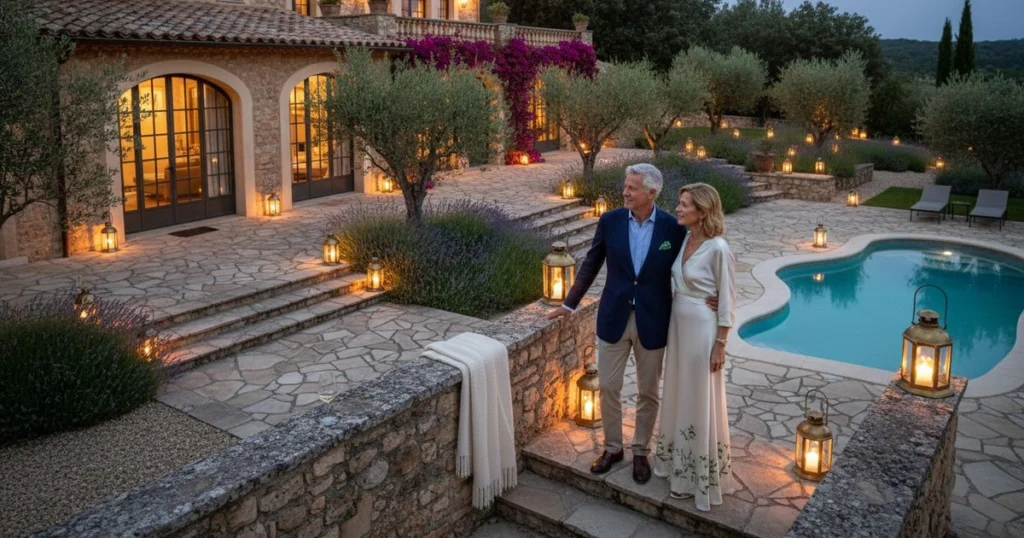
The phrase best luxury estate rental options evokes an immediate image of sprawling coastal compounds, secluded mountain retreats, and architecturally daring desert sanctuaries where guests can enjoy absolute privacy and five-star amenities. Yet, dissecting this concept reveals a highly fragmented landscape shaped by municipal zoning restrictions, complex short-term rental ordinances, state tax compliance rules, and distinct hospitality subcultures. A common misunderstanding assumes that any multi-million-dollar residential property listed on a high-end booking platform automatically qualifies as a premier operational asset. In practice, many residential estates lack the commercial-grade mechanical zoning, redundant utility backups, and professional staff accommodations required to sustain flawless service during extended stays.
Oversimplification also plagues how corporate planners and high-net-worth travelers evaluate these spaces, often reducing selection criteria to square footage, acreage, or aesthetic interior staging. While physical environment remains vital, modern executive rentals require dedicated fiber-optic network infrastructure, enterprise-grade cybersecurity firewalls, secure private gating, and discreet service cadences that protect the occupants’ privacy. Furthermore, regional lease structures and statutory occupancy limits introduce legal complexities that casual travelers easily overlook but can severely disrupt deployment stability.
Recognizing these operational nuances prevents costly misalignments between a property’s marketing narrative and its actual systemic performance. Identifying the ideal best luxury estate rental options requires balancing diverse infrastructural demands with uncompromising standards for security, technical redundancy, and service execution.
Deep Contextual Background
The lineage of elite residential leasing traces back to the traditional seasonal migrations of the 19th and early 20th centuries, when wealthy industrialist families relocated en masse to regional enclaves like Newport, the Hamptons, or the Adirondacks for the summer months. During this era, property leasing was an informal, relationship-driven transaction mediated by local estate attorneys and private caretakers, requiring months of physical preparation and permanent domestic staffing shifts.
Throughout the mid-20th century, the rise of commercial real estate brokerage and specialized hospitality management introduced more formal structures, though ultra-prime residential rentals remained a closely guarded, highly localized asset class. The subsequent digital revolution of the early 21st century catalyzed a structural shift, democratizing access to short-term properties while simultaneously creating a stark divide between mass-market vacation rentals and ultra-luxury institutional portfolios.
In recent years, the convergence of global mobility, remote executive management, and heightened privacy demands has transformed temporary estate leasing into a sophisticated institutional sector. Today’s ecosystem represents a mature synthesis of high-end architectural design, professional property asset management, and bespoke hospitality services, marking a profound evolution from the informal seasonal sublets of the past.
Conceptual Frameworks and Mental Models
Navigating the landscape of top-tier temporary residential holdings requires structured analytical tools rather than intuitive guesswork. Several mental models help decision-makers evaluate prospective properties against strategic objectives.
1. The Security-Seclusion Equilibrium
This model plots prospective estates across two axes: physical perimeter security and environmental seclusion. Effective high-end rentals provide absolute visual and acoustic isolation from public thoroughfares while maintaining robust electronic access controls, secure gating, and professional surveillance infrastructure.
2. The Infrastructure-Aesthetic Yield Curve
Luxury rentals must balance striking architectural design with bulletproof mechanical reliability. This model evaluates properties based on their internal engineering—such as commercial-grade HVAC, backup power generation, and redundant fiber-optic connectivity—ensuring that aesthetic beauty is never compromised by infrastructural fragility.
3. The Service-Autonomy Matrix
Temporary estate leasing involves balancing privacy with operational support. This model categorizes properties by their staffing flexibility, ranging from fully serviced compounds with resident estate managers and private chefs to autonomous, self-contained sanctuaries backed by on-call technical teams.
| Framework Category | Primary Focus | Main Operational Benefit | Potential Blind Spot |
| Security-Seclusion Equilibrium | Perimeter defense vs. natural privacy | Protects personal safety and blocks public intrusion | Can increase isolation from emergency services |
| Infrastructure-Aesthetic Yield | Architectural design vs. mechanical resilience | Prevents unexpected utility and structural failures | Requires rigorous pre-occupancy technical audits |
| Service-Autonomy Matrix | Staffed hospitality vs. private independence | Adapts the property to specific guest preferences | Can introduce staffing coordination friction |
Key Categories or Variations
Elite temporary residential holdings span multiple distinct asset typologies, each carrying inherent operational and environmental trade-offs.
-
The Coastal Island Compound: Sprawling waterfront estates situated on private or restricted-access islands, offering absolute water frontage and complete detachment from urban density. While providing unmatched aesthetic serenity, they involve complex marine logistics, vulnerability to coastal weather events, and reliance on dedicated transport.
-
The Alpine Wellness Sanctuary: High-altitude timber and glass compounds located in premier mountain corridors, featuring ski-in/ski-out access, advanced thermal insulation, and private spa wings. They offer exceptional seasonal recreation and crisp air quality, though altitude adjustment and winter storm road closures require robust logistical planning.
-
The Desert Modernist Oasis: Expansive architectural marvels set within arid canyon or desert environments (such as Palm Valley or Paradise Valley), emphasizing biophilic design, shaded courtyards, and massive temperature-controlled pools. Their primary advantage is year-round sunshine and striking geometry, though extreme summer heat places heavy demands on HVAC cooling systems.
When examining the market for the best luxury estate rental options, corporate planners and high-net-worth principals must weigh these categories against specific geographical and operational requirements.
| Category | Primary Advantage | Main Vulnerability | Best Suited For |
| Coastal Island Compound | Absolute waterfront privacy; unique vistas | Marine weather vulnerability; transport logistics | High-profile privacy seekers, summer retreats |
| Alpine Wellness Sanctuary | Exceptional winter/summer recreation; spa facilities | Winter weather road disruptions | Skiing enthusiasts, executive wellness retreats |
| Desert Modernist Oasis | Striking architecture; consistent sunshine | Extreme summer ambient heat loads | Creative production teams, winter sun seekers |
| Historic Agricultural Estate | Vast acreage; unique cultural heritage | Complex specialized maintenance | Multi-generational family reunions, film shoots |
| Urban Penthouse Compound | Skyline views; immediate business access | High density; lack of ground acreage | Corporate board deployments, urban executives |
Realistic Decision Logic
Selecting among these categories requires a diagnostic evaluation of the primary purpose of the temporary lease. If the deployment involves an intense multi-month corporate restructuring project requiring rapid transport access and urban networking, an urban penthouse compound or secure suburban mega-estate minimizes logistical friction. Conversely, if the objective is executive recovery, creative incubation, or family consolidation, an alpine sanctuary or coastal island compound provides the necessary psychological distance and environmental restoration.
Detailed Real-World Scenarios
To examine how these residential environments function in practice, consider the following operational scenarios across different estate contexts.
Executive Board Retreat at a Coastal Compound
-
Context: A Fortune 500 executive board requiring a secure, fully serviced coastal compound for a two-week strategic planning summit.
-
Constraints: Absolute requirement for encrypted presentation networks, 24-hour catering capabilities, and complete privacy from media observation.
-
Decision Path: The corporate logistics team secures a gated coastal island compound equipped with dedicated fiber internet, an on-site estate manager, and a professional commercial kitchen.
-
Failure Mode: Booking standard luxury resort villas that lack secure meeting infrastructure and network isolation, resulting in compromised proprietary discussions and unstable Wi-Fi connections.
-
Second-Order Effect: Utilizing a purpose-built, secure estate environment ensures uninterrupted strategic alignment, protects confidential corporate data, and provides an inspiring backdrop for high-level decision-making.
Creative Production and Talent Housing in a Desert Oasis
-
Context: A major media production company housing a core creative team and executive talent for a three-month desert filming schedule.
-
Constraints: Need for multiple independent guest suites, high-security equipment storage, and complete noise isolation for post-production review sessions.
-
Decision Path: The production coordinator leases a sprawling desert modernist compound featuring detached guest casitas, a sound-insulated screening room, and secure perimeter vehicle access.
-
Failure Mode: Placing production teams in fragmented urban rentals, leading to logistical delays, equipment security vulnerabilities, and inter-team friction due to lack of shared communal space.
-
Second-Order Effect: Providing a cohesive, luxurious compound environment boosts creative morale, streamlines equipment logistics, and keeps the production schedule tightly on track.
Planning, Cost, and Resource Dynamics
Executing elite temporary estate leases involves navigating complex financial and logistical variables. Direct costs extend far beyond base weekly or monthly rental rates, encompassing refundable security deposits, departure cleaning fees, local occupancy taxes, utility allocations, and optional staffing retainers. Indirect costs include the administrative overhead of negotiating specialized lease riders and the potential productivity loss associated with infrastructural failures.
Opportunity costs are particularly high when evaluating property selection. Choosing a subpar estate to reduce leasing expenditures can result in compromised operational efficiency, disrupted schedules, or guest dissatisfaction, dwarfing any initial financial savings.
| Expense Category | Typical Financial Impact | Primary Cost Drivers |
| Base Rental & Dues | 60% – 75% of total budget | Geographic tier, seasonal demand peaks, acreage scale |
| Staffing & Concierge Add-ons | 10% – 20% of total budget | Private chef retainers, daily housekeeping, security details |
| Utilities & Specialized Net | 5% – 10% of total budget | High-speed fiber lines, commercial pool/spa heating, generator fuel |
| Insurance & Security Riders | 5% – 10% of total budget | High-value tenant liability policies, equipment insurance |
Tools, Strategies, and Support Systems
Relying on consumer vacation rental portals is insufficient for sourcing elite residential estates. Maintaining operational excellence demands robust technical architecture and dedicated support systems.
-
B2B Luxury Portfolio Clearinghouses: Specialized digital platforms that aggregate off-market luxury estates with verified owner credentials and institutional lease agreements.
-
Dedicated Estate Property Managers: On-site or on-call operational liaisons responsible for maintaining mechanical systems, coordinating vendor access, and handling immediate repairs.
-
Encrypted Property Access Systems: Smart-lock and gate automation platforms allowing secure, time-sensitive digital key generation for authorized guests and staff.
-
Enterprise Network Provisioning Gear: Portable cellular and satellite failover routers ensuring uninterrupted high-speed internet connectivity in remote rural or island locations.
-
Comprehensive Pre-Occupancy Inspection Checklists: Standardized protocols verifying HVAC performance, pool chemistry, security camera alignment, and appliance functionality before guest arrival.
-
Private Aviation and Ground Logistics Integration: Specialized concierge services coordinating helicopter landing clearances, private car service fleets, and yacht moorings.
Risk Landscape and Failure Modes
Improperly managed or vetted luxury estate rentals can introduce severe financial, legal, and operational risks. The primary failure modes include:
-
Zoning and Ordinance Violations: Leasing properties in municipal districts that strictly prohibit short-term rentals, risking sudden lease cancellation or local law enforcement intervention.
-
Infrastructural Collapse: Renting remote estates with aging mechanical systems that fail under maximum occupancy, leading to prolonged plumbing, electrical, or HVAC outages.
-
Connectivity Failures: Inadequate broadband infrastructure in remote mountain or island settings, preventing executives from conducting essential digital operations or video conferences.
-
Privacy and Security Breaches: Inadequate perimeter security or overlapping public sightlines that compromise the safety and privacy of high-profile occupants.
-
Contractual Liability Disputes: Vague lease terms regarding damage liability, pet policies, or event hosting restrictions leading to costly security deposit retention battles.
Governance, Maintenance, and Long-Term Adaptation
Maintaining an effective temporary estate leasing strategy requires ongoing institutional oversight. Corporate travel departments and family offices should establish structured review cycles to evaluate property performance, audit vendor reliability, and update preferred estate portfolios.
Adjustment triggers should include shifts in regional real estate markets, changes in corporate deployment patterns, and evolving security or wellness expectations. Maintaining an updated residential playbook ensures that future leasing decisions maintain institutional continuity and high standards.
Layered Governance Checklist
-
Annual audit of preferred luxury estate portfolios, agency contracts, and insurance requirements.
-
Periodic review of property security compliance, fire safety standards, and network encryption capabilities.
-
Continuous monitoring of guest feedback, operational smoothness, and maintenance responsiveness.
-
Regular assessment of corporate leasing budgets in response to regional luxury market inflation.
Measurement, Tracking, and Evaluation
Evaluating the success and return on investment of elite temporary estate leases requires balancing quantitative financial metrics with qualitative experience and productivity indicators.
Quantitative Signals
-
Budget variance analysis comparing projected lease expenditures against actual invoices and incidental costs.
-
Maintenance ticket resolution velocity measuring how quickly property managers address in-lease repair requests.
-
Travel and logistics efficiency metrics tracking seamless transitions from arrival to occupancy.
Qualitative Signals
-
Guest and executive feedback surveys regarding domestic comfort, acoustic privacy, and environmental suitability.
-
Subjective assessment of stress reduction, project velocity, and overall experiential quality during the stay.
Documentation Examples
-
Pre-Occupancy Inspection Ledger: Standardized technical report verifying estate readiness, appliance functionality, and cleanliness standards before check-in.
-
Maintenance Incident Report: Chronological log recording any property mechanical issues and local vendor response times during the lease.
-
Post-Stay Performance Evaluation: Comprehensive internal review ranking the estate across security, comfort, service, and infrastructure reliability.
Common Misconceptions and Oversimplifications
-
Myth: Any high-priced property listed on consumer vacation rental sites qualifies as an elite corporate estate.
Correction: Consumer platforms often lack the mechanical redundancy, commercial kitchens, and security infrastructure required for high-level professional or private use. -
Myth: Remote rural or island estates offer better privacy with zero operational downsides.
Correction: Complete seclusion frequently introduces severe logistical challenges regarding emergency medical access, internet reliability, and maintenance response times. -
Myth: Luxury estate rentals operate under the same flexible booking and cancellation rules as standard hotels.
Correction: High-end residential leases involve strict contractual terms, substantial non-refundable deposits, and rigorous liability riders. -
Myth: Built-in smart home systems in luxury rentals are universally secure and reliable.
Correction: Consumer-grade IoT automations can fail or lack encryption, requiring pre-occupancy security audits. -
Myth: On-site staff availability is a standardized feature across all luxury rental options.
Correction: Many high-end estates offer strictly autonomous living, requiring guests to contract independent housekeeping and concierge services. -
Myth: Seasonal weather volatility has minimal impact on luxury estate functionality.
Correction: Extreme weather events in coastal, alpine, or desert regions can severely disrupt property utilities and transport access.
Conclusion
Mastering the selection and execution of elite temporary residential holdings requires viewing properties as sophisticated operational systems rather than passive vacation backdrops. Identifying and securing the best luxury estate rental options involves balancing uncompromising physical security, robust technical infrastructure, environmental seclusion, and professional hospitality management. By applying rigorous analytical frameworks rather than relying on surface-level marketing imagery, organizations and principals can transform temporary leases into powerful assets that safeguard well-being, protect confidential operations, and ensure enduring success.