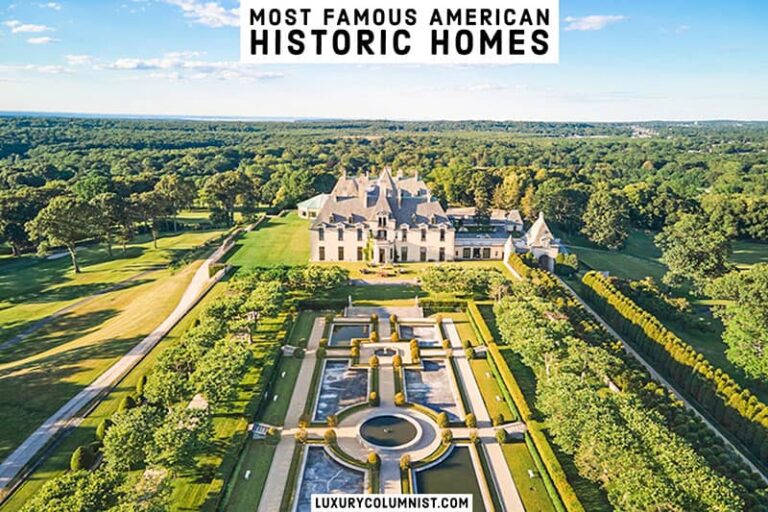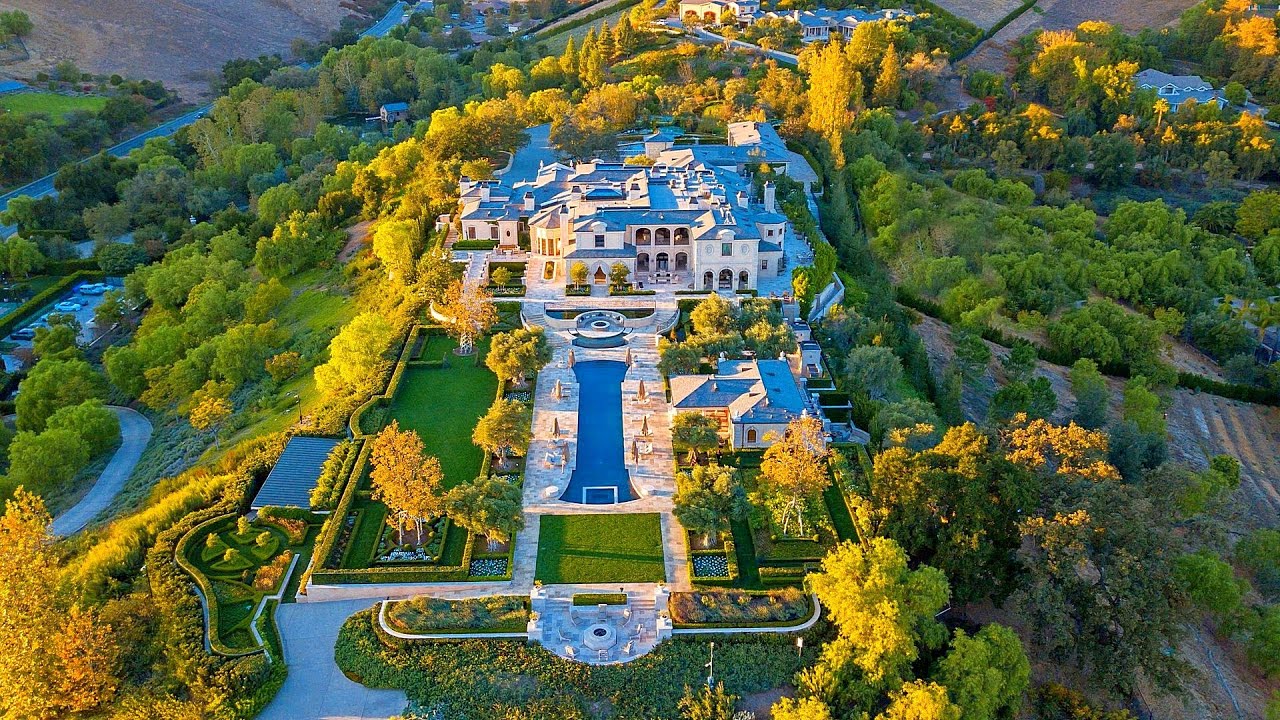
The Best Luxury Estates in the US: Ultimate Ultra-Prime Real Estate Guide
The American ultra-prime residential market operates on principles entirely detached from conventional real estate economics. While standard housing markets are governed by local median incomes, neighborhood school districts, and shifting mortgage interest rates, the upper echelon of domestic property is a global asset class. It functions at the intersection of private wealth preservation, architectural preservation, structural engineering, and dynastic asset structuring. Properties commanding nine- and ten-figure valuations are not merely places of habitation; they are complex operational ecosystems that require sophisticated institutional management, bespoke legal frameworks, and continuous capital allocation to maintain their market standing.
Evaluating the top tier of high-end residential real estate demands moving far beyond square footage, coastal proximity, and superficial interior finishes. True prestige properties are defined by the scarcity of their locations, historical provenance, architectural significance, zoning protections, and the sheer infrastructural capacity required to support them over decades. From historic coastal compounds in New England and working agricultural ranches in the Mountain West to tech-driven modern fortresses in California and historic limestone cooperatives in Manhattan, the American luxury landscape is radically fragmented. Each micro-market obeys its own unwritten rules, tax realities, and liquidity cycles.
This inquiry provides an exhaustive examination of the physical, financial, operational, and structural dimensions governing the premier tier of American residential property. By stripping away media sensationalism and architectural marketing, this analysis explores how ultra-prime assets are acquired, structured, maintained, and transitioned across generations. It serves as a comprehensive reference for buyers, family offices, wealth advisors, and institutional asset managers navigating the upper tiers of the built environment.
Understanding “best luxury estates in the US.”
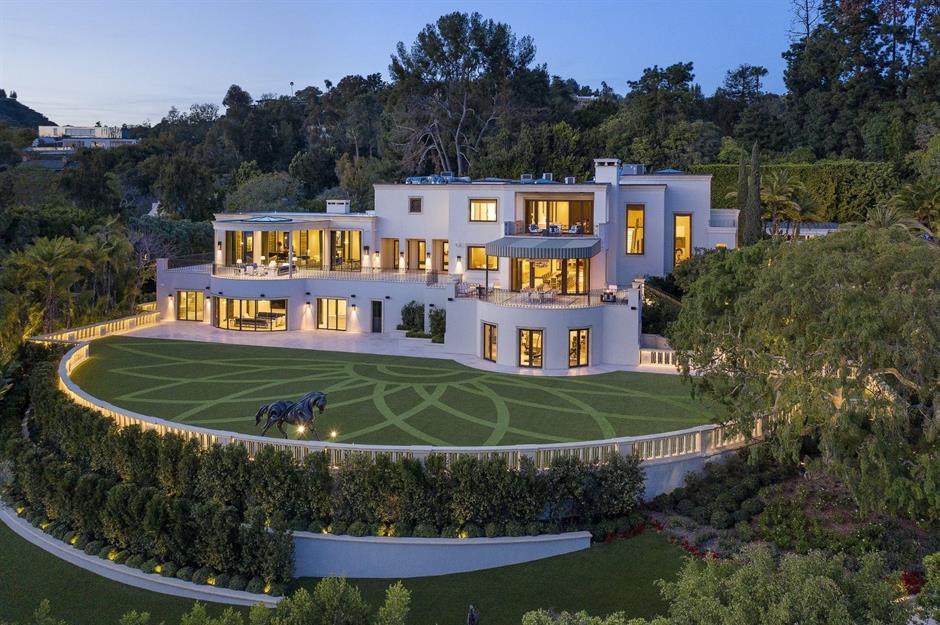
The pursuit of the best luxury estates in the US is fundamentally flawed if approached through the lens of a singular, universally applicable ranking system. Unlike public equities or standardized commodities, ultra-prime real estate lacks a centralized exchange or fungible unit of measure. What constitutes an apex asset to a tech entrepreneur seeking zero-latency fiber connectivity, an environmental infrastructure grid, and minimalist concrete design is entirely distinct from what a generational family office requires of an ancestral Hudson Valley estate or a Palm Beach oceanfront compound.
A primary driver of misunderstanding in this sector is the conflation of price with quality. While nine-figure transactions dominate financial headlines, high nominal value frequently reflects inflated construction costs, aggressive marketing, or transient stylistic trends rather than fundamental asset durability. True architectural and structural excellence relies on timeless siting, peerless craftsmanship, zoning moats that prevent future encroachment, and infrastructural resilience against environmental shifts.
Furthermore, oversimplifying the market by geographic concentration—assuming the highest quality exists exclusively in Manhattan, Palm Beach, Los Angeles, and Aspen ignores emerging secondary and tertiary corridors where privacy, land acreage, and tax optimizations converge. Evaluating the top tier requires dismantling generalized assumptions about square footage, amenity counts, and neighborhood prestige, replacing them with rigorous scrutiny of legal title clarity, water rights, zoning variances, and long-term carrying cost sustainability. Identifying the best luxury estates in the US requires an analytical framework that prioritizes structural integrity, historical durability, and operational efficiency over fleeting architectural trends.
Deep Contextual Background: The Evolution of American Wealth Architecture
The physical manifestation of American wealth has undergone profound structural transformations over the past two centuries. In the late nineteenth and early twentieth centuries, during the Gilded Age, the concept of the elite estate was codified by industrial titans who looked to European aristocracy for inspiration. Estates such as The Breakers in Newport or Biltmore in Asheville were statements of feudal permanence. They were massive country houses designed to project industrial dominance, featuring domestic labor forces numbering in the dozens and architecture designed to withstand centuries of shifting social dynamics.
The mid-twentieth century witnessed a democratization and decentralization of wealth, catalyzed by suburbanization, post-war economic expansion, and the rise of the corporate executive. The sprawling country estate gave way to the modernist architectural experiment—exemplified by Palm Springs and the coastal enclaves of Southern California—where indoor-outdoor living, structural engineering innovations like steel framing and expansive glass, and privacy behind gated acreage replaced European masonry traditions.
In the contemporary era, the definition of premier residential property has shifted again, driven by globalization, digital wealth creation, and heightened security imperatives. Today’s apex properties are defined less by ostentatious scale and more by sophisticated isolation, environmental self-sufficiency, integrated wellness infrastructure, and cyber-physical security. The modern compound must function simultaneously as a private sanctuary, a secure remote office, a climate-resilient bunker, and an art-grade museum environment capable of preserving multi-million-dollar collections against humidity, light degradation, and seismic or meteorological threats.
Conceptual Frameworks and Mental Models for Asset Evaluation
Navigating the ultra-prime property landscape requires mental models that account for illiquidity, operational complexity, and regulatory friction.
1. The Moat-and-Sovereignty Framework
Every property must be evaluated through its defensive characteristics. A physical moat (water, elevation, or acreage) is secondary to a regulatory moat—zoning restrictions, historic district protections, and strict local ordinances that prevent neighboring density. True sovereignty means absolute control over the surrounding vista and acoustic environment, ensuring that external development cannot compromise the asset’s utility or privacy.
2. The Operational-to-Capital Ratio (OCR)
Unlike standard residential real estate where the purchase price represents the primary capital commitment, ultra-prime estates exhibit high operational friction. The OCR framework dictates that an asset’s true cost is inclusive of ongoing staffing, specialized maintenance, municipal taxes, and security infrastructure. A property that is inexpensive to acquire relative to its size often masks a punitive operational cost structure that erodes long-term yield or holding viability.
3. The Liquidity Horizon Model
Ultra-prime assets do not trade on conventional timelines. The buyer pool for properties exceeding fifty million dollars is exceptionally thin, often numbering fewer than a few dozen qualified individuals globally at any given moment. This model forces an evaluation of time-to-liquidity under distressed conditions, prioritizing assets whose fundamental utility and global appeal can bridge extended market downturns without triggering forced sales.
Key Categories, Variations, and Comparative Trade-Offs
The upper tier of the American residential market is divided into distinct typologies, each carrying unique operational, legal, and financial profiles.
-
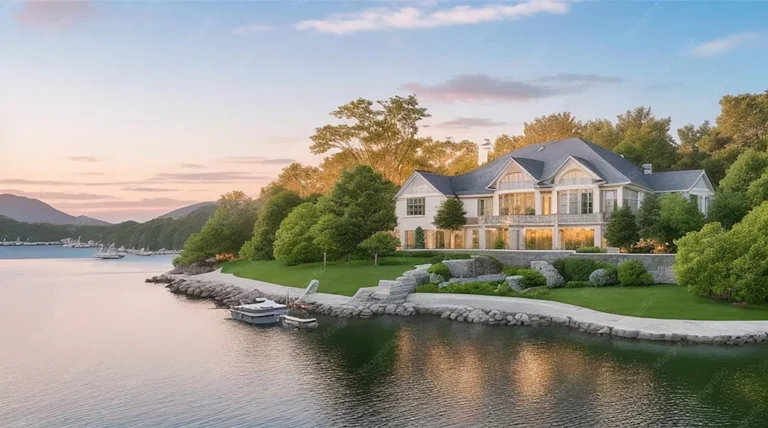
Coastal Compounds: Spanning the Hamptons, Palm Beach, coastal Malibu, and Newport. Characterized by high land scarcity, direct marine access, and vulnerability to sea-level rise and severe weather events.
-
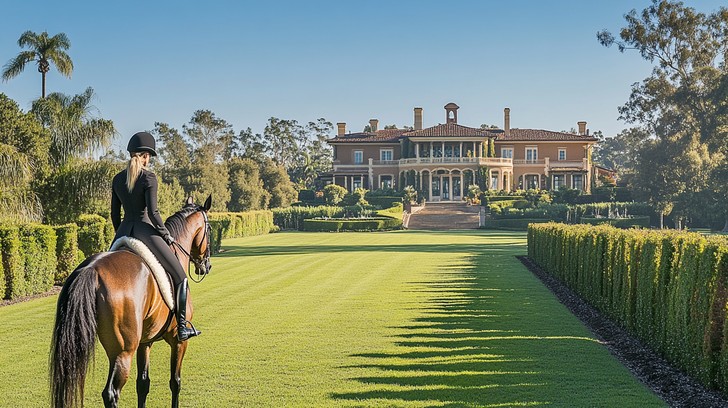
Historic Country Estates: Concentrated in the Hudson Valley, coastal Maine, and Virginia hunt country. Defined by architectural provenance, vast acreage, high historical preservation costs, and complex localized zoning.
-
Mountain and Ranch Sanctuaries: Dominating Aspen, Jackson Hole, Montana, and rural Texas. Emphasize vast spatial autonomy, ecological stewardship, water rights management, and extreme weather resilience.
-
Urban Mansions and Penthouses: Found primarily in Manhattan, San Francisco, and Chicago. Representing vertical luxury, cooperative board scrutiny, structural engineering marvels, and unmatched cultural proximity.
-
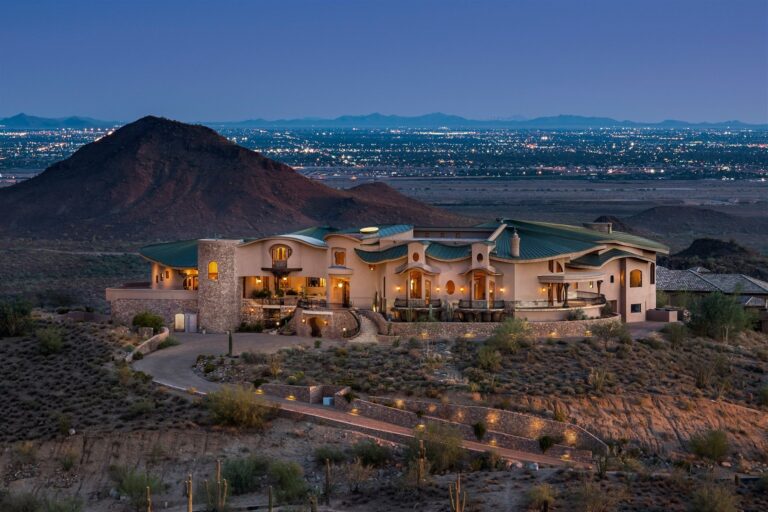
Desert Modernist Compounds: Anchoring Paradise Valley and Palm Springs. Characterized by severe climate engineering, thermal mass architecture, subterranean living spaces, and water conservation systems.
-
Island and Archipelago Holdings: Exclusive private or semi-private landmasses in New England, Florida Keys, and the Pacific Northwest. Defined by logistical isolation, autonomy, and complex marine engineering dependencies.
-
Architectural Masterpieces: One-of-a-kind modernist or classical commissions by master architects. Valued for design purity, yet often hampered by functional obsolescence and strict intellectual property or design covenants.
Comparative Typology Matrix
| Asset Category | Primary Liquidity | Operational Complexity | Climate Vulnerability | Capital Intensity |
| Coastal Compounds | Moderate-Low | High | Extreme (Storm Surge/Erosion) | Very High |
| Historic Estates | Low | Very High | Moderate | High |
| Mountain/Ranches | Low | High | High (Wildfire/Snow Load) | Extreme |
| Urban Penthouses | Moderate | Moderate | Low | High |
| Desert Modernist | Low | Moderate | Moderate (Heat/Water) | Moderate-High |
| Island Holdings | Very Low | Extreme | High (Erosion/Storms) | Extreme |
Realistic Decision Logic
When selecting among these categories, buyers must align their personal operational tolerance with the asset type. A buyer unwilling to manage agricultural water rights, localized wildlife interaction, and heavy seasonal staffing should immediately eliminate western ranch compounds. Conversely, an individual requiring absolute privacy from urban surveillance will find coastal compounds or urban penthouses inadequate compared to deep-acreage interior estates.
Detailed Real-World Scenarios and Acquisition Dynamics
The acquisition of properties at this level is rarely a straightforward transaction between a buyer and a seller. It involves layered legal entities, privacy veils, and complex contingencies.
The Off-Market Historic Acquisition in the Hudson Valley
-
Constraints: Strict historic preservation easements, aging nineteenth-century mechanical infrastructure, and an uncooperative local architectural review board.
-
Decision Points: Determining whether to integrate modern climate control systems within historic lath-and-plaster walls without violating preservation covenants.
-
Failure Modes: Subsurface mold proliferation due to incompatible vapor barriers retrofitted into historic masonry; severe friction with local preservation committees resulting in stop-work orders.
-
Second-Order Effects: Extended renovation timelines require maintaining dual primary residences for years, escalating administrative holding costs and property management overhead.
The Coastal Compound Redevelopment in Miami Beach
-
Constraints: Mandatory sea-level elevation codes, environmental protection acts governing seawalls, and hyper-competitive contractor availability.
-
Decision Points: Balancing the structural elevation of living spaces against local height-restriction zoning caps.
-
Failure Modes: Foundation settling due to high water tables and improper soil compaction during subterranean garage excavation.
-
Second-Order Effects: Astronomical insurance premiums or complete uninsurability by traditional carriers, necessitating specialized private-market reinsurance structures.
The Montana Ranch Assemblage
-
Constraints: Complex water rights allocations, split estates (surface vs. mineral rights), and severe winter access limitations.
-
Decision Points: Acquiring adjacent parcels to create an ecological buffer against commercial logging or energy exploration.
-
Failure Modes: Unresolved subsurface mineral rights resulting in unexpected drilling activity on adjacent or deeded land parcels.
-
Second-Order Effects: Substantial ongoing land stewardship expenses, agricultural tax management obligations, and wildlife management compliance.
The Manhattan Penthouse Structural Modification
-
Constraints: Cooperative board approval processes, rigid structural weight limits, and crane-lift permitting requirements in dense urban environments.
-
Decision Points: Installing custom structural steel reinforcements to support heavy cantilevered terraces and temperature-controlled wine cellars.
-
Failure Modes: Engineering miscalculations leading to acoustic transmission issues to floors below, triggering endless litigation and board friction.
-
Second-Order Effects: Drastic appreciation of administrative fees, mandatory building reserve fund contributions, and intense scrutiny from building management.
Planning, Cost, and Resource Dynamics
The financial architecture of owning and operating an ultra-prime estate extends far beyond the closing statement. Direct and indirect costs form a complex matrix that demands institutional-grade budgeting.
Financial Breakdown Framework
| Expense Category | Typical Annual Outlay Range | Variable Drivers |
| Property & Municipal Taxes | $100,000 – $2,000,000+ | Assessed valuation, local millage rates, agricultural/historic exemptions |
| Insurance & Reinsurance | $50,000 – $500,000+ | Flood zones, wildfire risk, hurricane exposure, replacement cost valuation |
| Staffing & Estate Management | $250,000 – $1,500,000+ | Full-time estate managers, groundskeepers, security personnel, housekeepers |
| Deferred Maintenance & Capex | 1% to 3% of asset replacement value | Material quality, structural complexity, environmental exposure |
| Utilities & Security Monitoring | $30,000 – $150,000+ | Climate control run-times, backup generation fuel, private security patrols |
Opportunity costs are similarly pronounced. Capital deployed into a non-yielding, highly illiquid real estate asset incurs a steep opportunity cost relative to diversified global equity or private credit portfolios. Consequently, buyers must view these estates through a lens of capital preservation and lifestyle consumption rather than speculative appreciation.
Tools, Strategies, and Support Systems
Managing an elite asset requires assembling a multidisciplinary professional advisory team. Relying on residential generalists is a primary failure vector.
-
Specialized Family Office Real Estate Directors: Professionals tasked with overseeing day-to-day operations, capital improvements, and vendor management across multiple properties.
-
Title and Sovereignty Counsel: Attorneys specializing in complex land title history, riparian rights, subsurface mineral rights, and international tax structuring.
-
Private Risk and Insurance Brokers: Specialists who construct bespoke insurance portfolios spanning property, casualty, cyber liability, and kidnap-and-ransom coverage.
-
Structural and Geotechnical Engineers: Independent consultants retained to assess coastal erosion, seismic integrity, soil liquefaction risks, and foundational load tolerances.
-
Environmental Compliance Consultants: Experts in navigating local, state, and federal wetlands regulations, endangered species acts, and coastal commission mandates.
-
Integrated Smart-Home and Cybersecurity Integrators: Technicians responsible for air-gapped network security, encrypted surveillance systems, and automated life-safety infrastructure.
-
Private Security Detail and Risk Assessors: Personnel who design physical access control, secure perimeters, and emergency evacuation protocols.
Limits of Support Systems: Even the most sophisticated advisory teams are subject to principal-agent friction. Estate managers and specialized contractors can develop institutional inertia, leading to inflated operational budgets and deferred identification of insidious structural deterioration. Continuous third-party auditing is mandatory.
Risk Landscape, Vulnerabilities, and Failure Modes
The risk profile of an ultra-prime estate is multi-dimensional, combining physical, financial, and legal hazards.
-
Environmental Degradation & Climate Shocks: Rising sea levels, prolonged drought cycles, localized aquifer depletion, and increased wildfire frequency pose existential threats to properties previously deemed secure.
-
Regulatory Entrapment: Unforeseen shifts in municipal zoning laws, historic preservation mandates, or short-term rental restrictions can severely restrict the utility and resale potential of an asset.
-
Deferred Maintenance Cascades: Due to the sheer scale of these properties, small issues—such as a failing flashing detail on a copper roof or a compromised subterranean drainage tile—can remain undetected until they cause catastrophic structural rot.
-
Privacy Compromise and Surveillance Vulnerabilities: The increasing proliferation of long-range drone technology, satellite imagery, and data-broker tracking makes maintaining absolute physical and digital privacy an escalating challenge.
-
Counterparty and Vendor Exposure: Reliance on exclusive, high-end contractors creates vulnerability to extortionate pricing, supply chain bottlenecks for rare materials, and operational paralysis if key artisans become unavailable.
Governance, Maintenance, and Long-Term Adaptation
Preserving a premier estate across decades requires a rigorous governance schedule mirroring commercial asset management.
Review Cycles and Adjustment Triggers
-
Quarterly: Comprehensive inspection of security perimeters, HVAC air filtration systems, water purification arrays, and backup generator load-testing.
-
Annually: Exterior envelope survey (roofing, caulking, masonry pointing), landscape health assessment, insurance valuation review, and property tax appeal filings.
-
Decennially: Major mechanical overhaul (chillers, boilers, electrical panels), interior design refreshes, and technological infrastructure upgrades to counter obsolescence.
Measurement, Tracking, and Evaluation Frameworks
Assessing the ongoing performance and health of an estate requires balancing qualitative assessments with quantitative operational metrics.
-
Leading Indicators: Early moisture-sensor telemetry alerts, minor wear patterns on high-traffic architectural elements, and shifts in local municipal zoning discussion agendas.
-
Lagging Indicators: Catastrophic system failures, sudden spikes in utility consumption indicating leakage or inefficiency, and insurance premium adjustments driven by regional risk reassessments.
-
Documentation Standards: Maintaining a comprehensive digital “Operations Bible”—an immutable, cloud-backed repository containing architectural blueprints, electrical schematics, vendor contracts, material specifications, and historical maintenance logs.
Common Misconceptions and Oversimplifications
-
Myth 1: Higher purchase prices guarantee flawless construction quality.
Correction: Many ultra-prime properties prioritize rapid aesthetic impact over foundational longevity, often requiring substantial remediation post-purchase. -
Myth 2: Elite estates are liquid assets that can be rapidly monetized during financial distress.
Correction: The ultra-prime buyer pool is extremely narrow; forced sales frequently result in valuation haircuts exceeding thirty to fifty percent. -
Myth 3: Standard residential property management companies can oversee mega-estates.
Correction: The mechanical, security, and staffing complexities of properties exceeding twenty thousand square feet require institutional-grade facility management. -
Myth 4: Historic designations enhance property value and utility.
Correction: While historic status provides architectural prestige, it frequently imposes onerous bureaucratic limitations that prevent necessary climate and modernization upgrades. -
Myth 5: Coastal properties are insulated from long-term value decline.
Correction: Accelerating environmental liabilities and tightening insurance markets are actively compressing valuations in vulnerable coastal corridors. -
Myth 6: Security is primarily a matter of hiring guards and installing gates.
Correction: Effective estate security is an integrated discipline encompassing cyber-network segmentation, structural hardening, perimeter sensing, and supply-chain vetting.
Ethical, Practical, and Contextual Considerations
The concentration of immense capital into private residential enclaves inevitably intersects with broader socio-economic and ecological realities. Large private land holdings frequently remove significant acreage from local tax rolls or public access corridors, sparking community friction. Furthermore, the immense energy consumption required to maintain climate-controlled mega-compounds, private water desalination systems, and extensive groundskeeping places substantial demands on local municipal infrastructure and natural resources.
Responsible ownership in the contemporary era requires a conscientious approach to ecological stewardship—integrating on-site solar micro-grids, greywater recycling systems, native landscaping that reduces water dependence, and collaborative relationships with local municipal authorities to ensure that private developments support rather than strain regional ecosystems.
Conclusion
The acquisition and stewardship of top-tier residential real estate demand a synthesis of financial rigor, operational vigilance, and architectural appreciation. These assets are enduring testaments to craftsmanship and design, yet they remain vulnerable to the relentless forces of nature, market shifts, and administrative neglect. By approaching ultra-prime real estate not as a liquid speculative instrument, but as a complex, multi-generational operational enterprise, owners and advisors can navigate its profound complexities, ensuring that these monumental properties preserve their structural integrity, privacy, and cultural significance for decades to come.