Luxury Ranch Estates USA: The Definitive Touring & Buying Guide
The intersection of vast geographical scale, agricultural productivity, and elite architectural refinement has redefined the upper echelons of North American real estate. Across the Intermountain West, the Texas Hill Country, the Front Range of the Rockies, and historic pockets of the East Coast, the modern high-end agricultural holding functions as a complex socio-economic enterprise. Rather than operating purely as domestic retreats or conventional farming operations, these multi-thousand-acre landholdings represent an intricate fusion of ecological stewardship, private conservation, heavy operational infrastructure, and generational legacy planning.
Examining these properties requires looking past cinematic tropes of Western romanticism to analyze the structural frameworks, regulatory burdens, water rights adjudications, and land management logistics that govern large-scale rural ownership. From working cattle operations spanning tens of thousands of deeded and leased acres to pristine sporting properties optimized for wildlife conservation and elite equestrian training, the asset class demands sophisticated technical mastery. The long-term viability and preservation of these holdings depend on balancing refined architectural design with rigorous environmental science, complex tax strategies, and sustainable resource management.
This analysis provides a definitive reference for understanding, evaluating, and managing high-end rural compounds. By unpacking the structural conditions, risk profiles, financial models, and governance frameworks that define this asset category, this inquiry establishes a foundational perspective on how ultra-high-net-worth capital interacts with vast, vulnerable American landscapes.
Understanding “luxury ranch estates USA.”
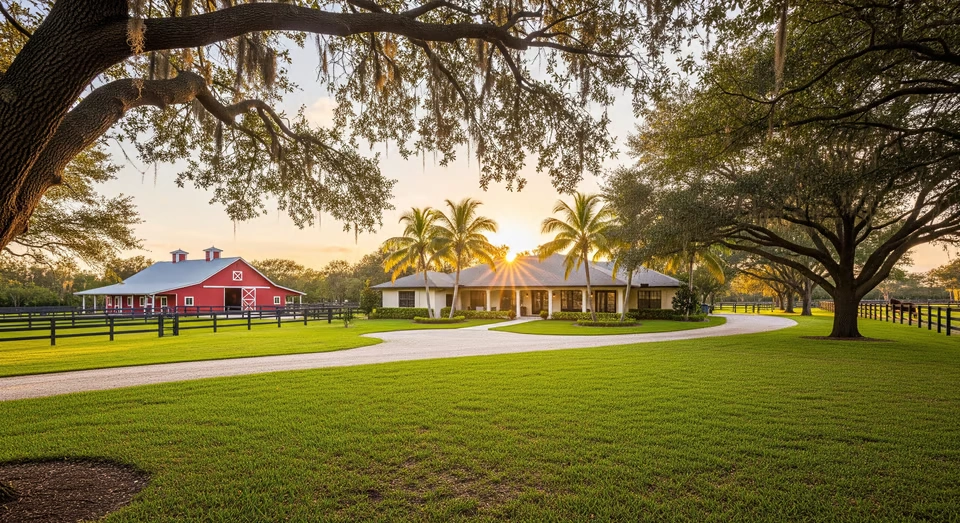
The classification of luxury ranch estates USA is frequently misconstrued by commercial marketing narratives and standardized real estate commentary. At its core, the phrase does not describe a uniform style of country home or a subdivision acreage with western-themed detailing, but rather represents the absolute apex of large-acreage landownership where sophisticated residential design coexists with active agricultural, ecological, or sporting utility. A common misinterpretation assumes that any rural property exceeding a certain acreage threshold or featuring a custom log-and-stone residence qualifies as a premier holding. In professional land brokerage and asset management terms, an authentic luxury holding requires a delicate equilibrium between architectural scale, self-sustaining or leased agricultural production, secure water rights, and substantial contiguous deeded acreage.
Oversimplifying these properties as mere vacation getaways ignores the complex legal, environmental, and operational realities that dictate their long-term value. Valuation is driven not solely by the square footage of the primary owner’s residence or interior finish levels, but by the legal security of senior water rights, the condition of perimeter and cross-fencing, wildlife migratory corridors, mineral rights ownership, and the presence of functional working infrastructure such as barns, arenas, and employee housing. Properties that lack verified water security, suffer from fragmented parcel boundaries, or carry deferred environmental liabilities face severe liquidity constraints, regardless of the aesthetic opulence of the main lodge.
True comprehension of this asset class requires analyzing how distinct regional geographies shape operational form. A holding in the Greater Yellowstone ecosystem must contend with heavy winter snowpacks, wildlife management mandates, and short growing seasons, whereas a compound in the Texas Hill Country prioritizes subsurface aquifer management, exotic and native wildlife program integration, and year-round recreational access. Evaluating these assets demands an analytical framework that weighs architectural refinement against the unyielding physical parameters of land stewardship.
Deep Contextual Background
The evolution of ultra-prime rural landholdings in the United States reflects broader shifts in industrial wealth accumulation, conservation philosophies, and shifting rural demographics. During the late nineteenth and early twentieth centuries, eastern industrialists and European investors acquired vast tracts of western land primarily for livestock production, timber extraction, or private hunting clubs. These early properties operated as traditional, labor-intensive production units, with residential quarters remaining secondary to the core livestock or timber business.
Throughout the late twentieth century, a profound cultural and economic transition altered the marketplace. The influx of corporate wealth, technology fortunes, and global capital shifted demand toward properties that combined productive agricultural capacity with world-class residential architecture and sporting infrastructure. Simultaneously, the proliferation of state and federal conservation easements provided landowners with powerful financial and legal tools to protect open spaces from subdivision while optimizing tax strategies. Acquiring and holding large tracts transitioned from an exercise in traditional livestock management to an institutionalized discipline involving conservation biology, watershed protection, and estate tax mitigation.
In contemporary markets, these assets serve dual functions as generational family legacy compounds and fortified sanctuaries against macroeconomic volatility. The concentration of private wealth, paired with heightened interest in physical privacy, regenerative agriculture, and outdoor recreation, has compressed available inventory in premier micro-markets like Jackson Hole, Bozeman, Aspen, and the Texas Hill Country. Consequently, modern acquisitions frequently involve complete overhauls of legacy infrastructure to incorporate green-certified energy grids, advanced water storage systems, high-speed satellite communications, and sophisticated habitat restoration programs, marking a definitive evolution from nineteenth-century working ranches to twenty-first-century ecological preserves.
Conceptual Frameworks and Mental Models
Evaluating, acquiring, and operating a premier acreage holding requires robust mental models that account for variables far beyond standard residential appraisal metrics.
1. The Production-Amenity Equilibrium
This framework quantifies the tension between commercial agricultural viability and private recreational enjoyment. It evaluates a holding based on whether it functions as a standalone revenue-generating cow-calf operation, a leased grazing unit, a commercial hunting enterprise, or a pure conservation sanctuary, balancing operating expenses against tax incentives and lifestyle utility.
2. The Hydrological Security Index
This mental model maps the absolute lifeblood of any large-acreage holding: water. It analyzes the hierarchy of water rights (senior versus junior decrees), physical diversion infrastructure, ditch company shares, well permits, natural live water (creeks, rivers, springs), and storage pond capacities, ensuring the property remains resilient against regional drought cycles.
3. The Ecological Fragmentation Gradient
This framework assesses the spatial integrity of the landmass against external pressures such as adjacent subdivision, road density, and migratory corridor disruption. It categorizes properties based on boundary contiguity, interior fencing permeability, and the presence of conservation easements that permanently shield the core ecosystem from incompatible external development.
Key Categories and Variations of Properties
High-end agricultural and recreational holdings manifest in several distinct typologies, each imposing unique operational trade-offs, capital expenditure requirements, and lifestyle profiles.
-
Working Cattle and Livestock Operations: Vast properties optimized for cow-calf production, yearling backgrounding, or extensive grazing leases. Trade-off: Significant acreage and agricultural tax exemptions, balanced against heavy operational labor requirements, machinery maintenance, and fluctuating commodity exposure.
-
Elite Sporting and Fishery Reserves: Holdings anchored by premier trout fisheries, major river frontages, or managed upland bird and big game habitats. Trade-off: Exceptional recreational utility and high market desirability, balanced against specialized habitat management costs and seasonal use constraints.
-
Equestrian and Breeding Compounds: Properties designed around world-class barns, indoor riding arenas, veterinary facilities, and turnout pastures. Trade-off: Superior infrastructure for horse enthusiasts and professional trainers, offset by intensive daily labor demands and specialized utility overhead.
-
Conservation-First Legacy Holdings: Estates where agricultural production is minimized in favor of aggressive wildlife restoration, reforestation, and rewilding initiatives. Trade-off: Maximum ecological integrity and potential tax optimization via conservation easements, offset by limited agricultural revenue generation.
-
Hill Country and Oak-Savannah Compound Estates: Rolling acreage holdings centered around dense wildlife management plans, luxury entertaining compounds, and multi-generational family infrastructure. Trade-off: Mild climates and strong regional social networks, balanced against brush management demands and localized groundwater conservation districts.
Comparative Analysis of Property Typologies
| Typology | Primary Geographic Focus | Operational Intensity | Core Infrastructure Focus | Typical Revenue Model |
| Working Cattle Operation | Great Plains / Intermountain West | High | Corrals, barns, fencing, stock tanks | Livestock sales, agricultural leases |
| Sporting & Fishery Reserve | Rockies / Pacific Northwest | Medium | Lodges, fisheries enhancement, guide cabins | Commercial hunting/fishing, outfitting |
| Equestrian Compound | Central US / Mountain Valleys | High | Indoor arenas, wash stalls, paddocks | Boarding, breeding, private training |
| Conservation Legacy | Nationwide Eco-Corridors | Low | Minimalist residential, habitat fencing | Carbon credits, tax incentives, none |
| Hill Country Compound | Texas / Southern Plains | Medium | High-fence game management, lodges | Hunting leases, wildlife exemptions |
Realistic Decision Logic
When selecting a high-end rural asset, purchasers must weigh their appetite for active management against their recreational objectives. Buyers seeking passive capital preservation and multi-generational family recreation typically gravitate toward conservation-protected sporting estates or managed Hill Country compounds, where professional farm managers can handle daily oversight. Conversely, purchasers committed to active agricultural production must embrace the complex operational realities of managing livestock herds, irrigation systems, and seasonal labor markets.
Detailed Real-World Scenarios and Operational Dynamics
To understand how these properties function under operational stress, consider four distinct field scenarios encountered by owners and property managers.
Severe Regional Drought and Irrigation Curtailment
A large working cattle ranch in the Northern Rockies faces an official state water commissioner curtailment order due to low snowpack and depleted river flows. Junior water rights held by the ranch are shut off mid-summer.
-
Failure Mode: Irrigated hay meadows dry up completely before the second cutting, destroying winter feed production for the 600-head cow herd.
-
Second-Order Effect: The owner is forced to liquidate a significant portion of the herd at depressed market prices or purchase high-cost external winter hay, severely impacting the annual operational budget.
Wildfire Threat in Mountain Timber Holdings
An elite sporting estate surrounded by dense pine forests faces an approaching wildfire driven by high winds and severe drought conditions.
-
Failure Mode: Power grids fail, cutting off electric water pumps required to feed the property’s dedicated fire suppression sprinkler systems and defensive water cannons.
-
Second-Order Effect: Reliance shifts immediately to auxiliary diesel generators and gravity-fed pond reserves, requiring pre-positioned wildland firefighting teams to protect primary residential structures and employee housing.
Conservation Easement Compliance Audit Failure
An owner attempts to construct a new guest cabin and secondary machinery shed within an area designated as a protected wildlife buffer under a binding conservation easement held by a land trust.
-
Failure Mode: The land trust flags the construction as a direct violation of the easement’s surface-disturbance limitations, triggering a formal legal dispute.
-
Second-Order Effect: Mandatory remediation and structure removal orders are issued, alongside significant legal expenditures and strained relations with oversight organizations.
Ephemeral Stream Degradation and Regulatory Penalties
Heavy livestock grazing along an unfenced riparian corridor leads to severe bank erosion, siltation, and elevated water temperatures in a blue-ribbon trout stream traversing a private valley holding.
-
Failure Mode: State environmental agencies cite the property for violations of clean water standards and habitat degradation, threatening local fishing permits.
-
Second-Order Effect: The owner must fund an expensive riparian restoration project, installing cross-fencing, off-stream watering tanks, and willow plantings to rehabilitate the stream channel.
Planning, Cost, and Resource Allocation
Acquiring and maintaining an ultra-prime rural holding demands rigorous financial modeling that extends far beyond the initial purchase price. Operating expenditures for large acreage properties typically require dedicated management teams, specialized heavy machinery, and ongoing infrastructural maintenance.
Financial Dynamics and Cost Variability
| Expense Category | Annual Budget Range (USD) | Cost Drivers & Variables |
| Ranch Management & Labor Salaries | $150,000 – $600,000+ | Full-time ranch manager, cowboys, maintenance crew, administrative staff |
| Heavy Equipment & Fleet Maintenance | $50,000 – $250,000+ | Tractors, bulldozers, utility vehicles, stock trailers, fuel costs |
| Infrastructure & Land Stewardship | $100,000 – $500,000+ | Fencing repair, weed control, irrigation ditch maintenance, timber management |
| Property & Casualty Insurance | $75,000 – $300,000+ | Wildfire liability, agricultural liability, structural and equipment coverage |
Opportunity Costs and Resource Optimization
A frequent financial miscalculation involves underestimating the capital expenditure required to bring deferred infrastructure up to modern standards. Legacy properties frequently feature aging pivot irrigation systems, deteriorating perimeter fencing, and inefficient heating plants. Structuring capital improvements requires comprehensive long-term master planning to prioritize revenue-generating infrastructure before aesthetic residential upgrades.
Tools, Strategies, and Support Systems
Successfully managing an expansive rural holding requires a sophisticated ecosystem of specialized physical assets, digital platforms, and operational personnel.
-
Geospatial Land Management Software: Cloud-based GIS mapping platforms tracking paddock rotations, irrigation zones, fence maintenance logs, and wildlife census data across thousands of acres.
-
Commercial-Grade Heavy Machinery Fleet: Rubber-track tractors, excavators, graders, and skid-steers necessary for road maintenance, ditch cleaning, and agricultural production.
-
Advanced Water Monitoring and Telemetry Systems: Automated flow meters, well-level sensors, and remote-controlled pivot irrigation panels accessible via mobile devices.
-
Redundant Power Infrastructure: High-capacity diesel and propane generators paired with solar microgrids to ensure continuous operation of well pumps, security systems, and residential nodes during grid outages.
-
Satellite Communication and Mesh Networks: Low Earth Orbit satellite broadband and private two-way radio repeater systems ensuring seamless communication across vast topographical dead zones.
-
Professional Ranch Manager and Field Crews: Experienced resident personnel responsible for daily operational execution, machinery maintenance, and coordination with local contractors and regulatory bodies.
-
Specialized Legal and Water Rights Counsel: Retained legal experts specializing in state water law, mineral rights, conservation easements, and agricultural tax status compliance.
-
Comprehensive Wildlife Management Plan: Structured protocols developed in coordination with state wildlife agencies for game census, predator management, and habitat enhancement.
Risk Landscape and Failure Modes
The risk profile of large-acreage rural real estate combines standard high-end property vulnerabilities with unique systemic hazards driven by environmental exposure, ecological complexity, and operational scale.
Compounding Risks in Expansive Rural Ecosystems
-
The Regulatory Compliance Cascade: Violating environmental, water use, or labor regulations can trigger a cascading series of administrative fines, loss of agricultural tax exemptions, and expensive mandatory remediation orders.
-
Climate and Weather Volatility: Extended droughts, unseasonal freezes, and intense wildfire seasons directly threaten agricultural yields, timber assets, and structural integrity across vast, difficult-to-defend landscapes.
-
Labor Scarcity and Retention: Attracting and retaining skilled agricultural and technical labor in remote rural areas represents a chronic operational bottleneck that can lead to deferred maintenance and infrastructural decay.
-
Mineral and Subsurface Conflict: Owning surface rights without corresponding mineral rights creates severe vulnerability to external oil, gas, or mining exploration that can disrupt surface privacy and ecological health.
Governance, Maintenance, and Long-Term Adaptation
Preserving the structural integrity and economic value of an expansive rural holding requires disciplined adherence to preventive maintenance protocols and continuous environmental monitoring.
Monitoring and Review Cycles
Property managers must execute structured seasonal audits, evaluating irrigation headgates, bridge load capacities, dam safety, noxious weed infestations, and structural timber conditions prior to and immediately following high-exposure weather seasons.
Layered Maintenance Checklist
-
Water Infrastructure Assessment: Inspection of ditches, culverts, stock tanks, well pumps, and pivot systems to ensure unobstructed flow and mechanical reliability.
-
Perimeter and Interior Fencing: Systematic repair of barbed wire and high-tensile fencing to maintain livestock control and define property boundaries.
-
Defensible Space and Fire Mitigation: Clearing brush, limbing ladder fuels, and maintaining firebreaks around all primary residences, guest lodges, and agricultural outbuildings.
-
Soil and Pasture Health: Monitoring grazing pressure, rotating livestock herds to prevent overgrazing, and seeding native cover crops to suppress invasive weed species.
Measurement, Tracking, and Evaluation
Evaluating the operational efficiency, ecological health, and long-term asset value of a rural holding requires tracking both quantitative parameters and qualitative resilience indicators.
-
Quantitative Metrics: Animal Unit Month (AUM) carrying capacity, irrigation water volume efficiency ratios, annual maintenance expenditure per acre, and net operating income from agricultural or sporting leases.
-
Qualitative Signals: Biodiversity index improvements, soil organic matter retention rates, staff retention stability, and seamless regulatory compliance during local audits.
-
Documentation Standards: Maintaining an exhaustive digital ledger recording all historical water rights decrees, conservation easement boundaries, veterinary records, and mechanical maintenance logs ensures institutional memory across ownership transitions.
Common Misconceptions and Oversimplifications
-
Myth: Owning a large rural property automatically grants complete freedom to alter land use, build structures, or dam streams as desired.Correction: Expansive properties are subject to complex county zoning, state water commissioner oversight, environmental protection laws, and strict conservation easement restrictions.
-
Myth: Agricultural tax exemptions eliminate the financial burden of holding thousands of acres.Correction: While agricultural status significantly reduces property tax liabilities, meeting state productivity requirements involves substantial operational labor and input costs.
-
Myth: A luxury ranch runs itself passively once professional managers are hired.Correction: High-end holdings require active oversight from ownership regarding capital allocation, legal compliance, strategic vision, and risk management.
-
Myth: Surface ownership guarantees control over everything beneath the land.Correction: Split estates—where mineral rights are severed from surface rights are common, meaning third-party entities may hold legal rights to conduct subsurface extraction.
-
Myth: Water rights are permanent and unalterable once a property is purchased.Correction: Water rights operate under the doctrine of prior appropriation and can be lost through abandonment or curtailed during severe drought declarations.
-
Myth: Constructing a high-end compound in a remote location is logistically identical to building a suburban estate.Correction: Material transport bottlenecks, scarcity of specialized contractors, and extreme weather windows inflate construction costs and timelines significantly.
Ethical, Practical, and Contextual Considerations
Acquiring and operating a vast rural estate carries a profound ecological and social responsibility. These landscapes often form vital ecological corridors for migratory wildlife, overlap with historic indigenous cultural sites, and anchor the social fabric of rural agricultural communities. Responsible stewardship mandates minimizing environmental footprints through sustainable grazing rotations, wildlife-friendly fencing designs, water conservation, and respectful engagement with local neighbors and county authorities. Furthermore, supporting local rural economies by sourcing agricultural supplies, employing regional labor, and patronizing local businesses ensures that private stewardship contributes positively to the broader community.
Conclusion
The acquisition and curation of premier agricultural and recreational holdings represent the ultimate synthesis of landscape-scale conservation, operational enterprise, and architectural design. By moving past the superficial romance of Western frontier life and confronting the relentless operational realities of water rights administration, ecological management, logistical friction, and regulatory compliance, owners can establish enduring sanctuaries of privacy and productivity. Whether navigating the high mountain valleys of the Rockies, the sweeping plains of the Midwest, or the rolling oak forests of the southern tiers, these exceptional properties demand a synthesis of rigorous operational discipline, financial commitment, and deep ecological respect—balancing modern technological stewardship with the timeless power of the American land.