Best Luxury Island Estates in the US: The Definitive Guide
The architectural manifestation of ultra-high-net-worth isolation takes its most uncompromising form within the insular topology of the United States. Across coastal barrier keys, glacial freshwater lakes, Pacific saltwater sounds, and sub-tropical keys, these high-value compounds represent an intricate fusion of structural engineering, environmental stewardship, and absolute spatial autonomy. Rather than operating merely as domestic dwellings, these properties function as self-contained micro-municipalities. They balance the psychological imperative for solitude with the extreme technical demands of marine weathering, logistical independence, and complex jurisdictional oversight.
Examining this asset class requires moving past superficial portrayals of leisure and opulence to analyze the rigorous structural mechanics, environmental vulnerabilities, and regulatory frameworks governing insular landownership. From the granite-rimmed islands of the Northeast coast to the coral-shelf foundations of southern Florida and the tide-swept archipelagos of the Pacific Northwest, each regional typology introduces distinct logistical burdens. The long-term viability of these holdings depends less on ornamentation and more on redundancy in power generation, water purification, structural fortification against storm surges, and the delicate management of fragile marine ecosystems.
This analysis provides a definitive reference for understanding, evaluating, and managing ultra-prime island properties. By examining the systemic conditions, physical risks, financial architectures, and operational frameworks that define this asset category, this inquiry establishes a foundational perspective on how extreme wealth interacts with some of the most dynamic and vulnerable environments on the North American continent.
Understanding “best luxury island estates in the US.”
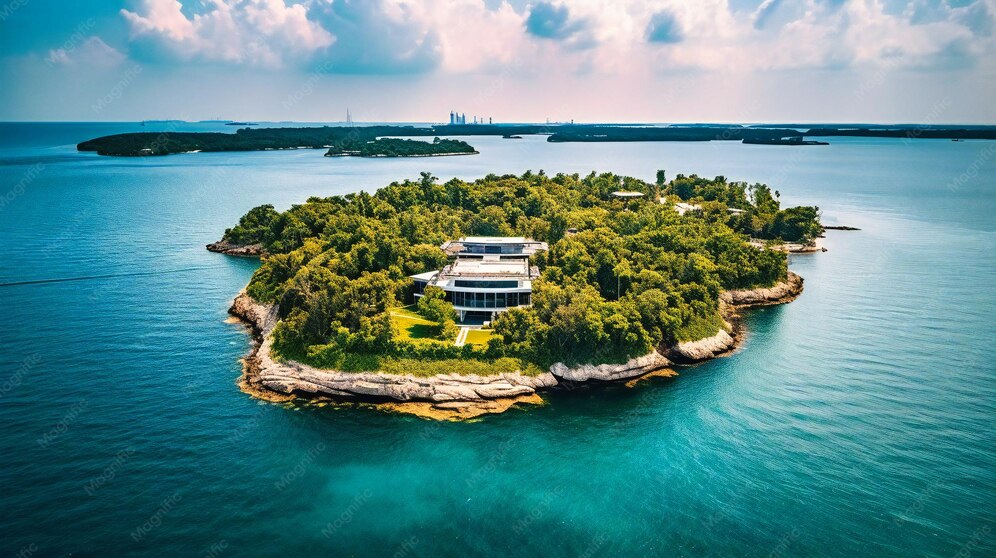
The classification of the best luxury island estates in the US is frequently obscured by real-time marketing hyperbole and generalized lifestyle media. At its core, the phrase does not denote a single, standardized tier of real estate, but rather represents a multifaceted apex of architectural achievement, geographic exclusivity, and operational independence. A common misinterpretation assumes that any high-value coastal compound or secluded mainland peninsula qualifies as an island estate. In strict structural and legal terms, an authentic insular estate occupies a distinct, completely detached landmass surrounded by water at all tidal stages, requiring specialized marine transport for human and material access.
Oversimplifying these properties as mere vacation compounds ignores the complex legal, environmental, and engineering realities that dictate their viability. Valuation is driven not solely by interior square footage or aesthetic finishes, but by structural redundancy, riparian rights, private dock permitting status, island-specific zoning restrictions, and the absolute cost of autonomous utility provisioning. Properties that lack deep-water access, possess fragile shorelines susceptible to rapid erosion, or rely entirely on fragile mainland utility lines face severe liquidity and functional constraints, regardless of the scale of the primary residence.
True comprehension of this asset class requires analyzing how distinct regional geographies shape architectural form. An estate in the San Juan Islands of Washington State must contend with granite substrates, tidal currents, and strict maritime environmental protections, whereas a compound in the Florida Keys prioritizes storm surge resistance, marine-grade corrosion mitigation, and autonomous freshwater desalination. Evaluating these properties demands an analytical framework that weighs aesthetic luxury against the unyielding physical parameters of insular isolation.
Deep Contextual Background
The evolution of ultra-prime island real estate in the United States reflects broader shifts in industrial wealth accumulation, environmental regulation, and technological capability. During the Gilded Age, American industrialists popularized the concept of exclusive insular retreats, establishing sprawling seasonal compounds along the coast of Maine, the Thousand Islands of New York, and coastal New England. These early estates relied on steam-powered yachts, localized ice harvesting, and manual labor forces, functioning as seasonal sanctuaries from the soot and social stratification of rapidly industrializing mainland cities.
Throughout the mid-twentieth century, the expansion of commercial aviation, marine engineering, and advanced materials transformed the development paradigm. Islands that were once accessible only via unpredictable schooners or seasonal ice bridges became reachable year-round through private helicopter pads, deep-water basin dredging, and engineered causeways. Simultaneously, the proliferation of federal and state environmental protection statutes—such as the Coastal Zone Management Act and stringent wetlands regulations—drastically altered the legal landscape. Building or modifying structures on an island transitioned from an exercise in frontier expansion to a heavily regulated administrative negotiation involving multiple environmental agencies.
In contemporary markets, these properties serve dual functions as generational legacy assets and fortified sanctuaries against macroeconomic volatility. The concentration of global wealth, coupled with heightened interest in physical security, privacy, and climate resilience, has compressed available inventory in prime zip codes. Consequently, modern acquisitions frequently involve complete structural overhauls to incorporate green-certified energy grids, advanced desalination plants, hurricane-rated envelope engineering, and encrypted communication networks, marking a definitive evolution from nineteenth-century rustic leisure to twenty-first-century technological autonomy.
Conceptual Frameworks and Mental Models
Evaluating, acquiring, and operating a premier island property requires robust mental models that account for variables far beyond standard residential appraisal metrics.
1. The Logistical Isolation Index
This framework quantifies the friction of distance and terrain between the insular property and mainland support networks. It evaluates an estate based on transit time during adverse weather conditions, availability of redundant marine craft, proximity to trauma-capable medical infrastructure, and the speed at which specialized contractors can mobilize to execute emergency repairs.
2. The Autonomous Infrastructure Equilibrium
This mental model models the estate not as a consumer connected to municipal grids, but as a closed-loop utility provider. It maps the balance between primary and backup power generation, potable water collection and treatment, wastewater containment, and waste management, ensuring the property can sustain complete operational independence during prolonged mainland grid failures.
3. The Shoreline Vulnerability Gradient
This framework assesses the long-term integrity of the landmass itself against hydrodynamic forces, sea-level trends, and coastal erosion. It categorizes properties based on geological substrate stability, natural breakwater protection, historical accretion versus erosion rates, and the legal and financial viability of implementing engineered shoreline armor.
Key Categories and Variations of Insular Estates
Insular properties across the United States manifest in several distinct typologies, each imposing unique architectural trade-offs, engineering demands, and lifestyle profiles.
-
Sub-Tropical Coral and Barrier Reef Keys: Exemplified by private or semi-private islands in the Florida Keys. Trade-off: Warm climate, exceptional yachting access, and vibrant marine ecosystems, balanced against extreme exposure to tropical storm surges, aggressive saltwater corrosion, and strict environmental constraints.
-
Glacial Granite and Tidal Archipelagos: Found extensively along the coast of Maine and Casco Bay. Trade-off: Dramatic granite topography, deep-water anchorages, and profound historical privacy, offset by cold seasonal climates, rocky shallows, and reliance on ferry or private vessel transit.
-
Freshwater Lacustrine Compounds: Located within major lake systems such as the Thousand Islands in New York or large freshwater lakes in New Hampshire and Minnesota. Trade-off: Calm waters, freshwater swimming, and freedom from marine salt corrosion, balanced against seasonal freezing cycles and restricted winter access.
-
Pacific Saltwater Sound Sanctuaries: Represented by estates within Washington State’s San Juan Islands. Trade-off: Temperate maritime climates, majestic evergreen forests, and dramatic mountain backdrops, offset by complex tidal currents, strict shoreline development bans, and overcast microclimates.
-
Man-Made and Dredged Platform Estates: Highly engineered artificial or heavily modified islands near metropolitan coastal hubs like Miami or New York. Trade-off: Unprecedented proximity to urban financial and cultural centers with immediate deep-water yacht basins, balanced against immense upfront capital costs and intensive ongoing geotechnical monitoring.
Comparative Analysis of Insular Typologies
| Typology | Primary Regional Setting | Environmental Exposure | Infrastructure Complexity | Typical Access Mode |
| Barrier Key Compound | South Florida / Keys | Hurricanes, storm surge, salt air | High (Desalination, HVAC, Generators) | Yacht, Seaplane, Causeways |
| Granite Coastal Island | Maine / Northeast | Nor’easters, extreme tides | Medium-High (Subsea cables or microgrids) | Private Launch, Utility Boat |
| Lacustrine Estate | Great Lakes / Northern NY | Ice expansion, winter freeze | Medium (Standard mainland hookups or solar) | Motorboat, Winter Ice Transit |
| Pacific Sound Retreat | Washington / Pacific NW | Strong tides, windstorms | Medium-High (Rainwater catchment, backup power) | Ferry, Private Vessel, Floatplane |
| Metropolitan Artificial Key | Miami / Coastal Hubs | Urban wake, storm surge | Maximum (Commercial-grade bulkheads, smart grids) | Bridge, Motor Yacht, Helicopter |
Realistic Decision Logic
When selecting an island asset, purchasers must weigh their tolerance for operational friction against their desire for absolute seclusion. Buyers prioritizing immediate urban access and effortless logistics naturally gravitate toward engineered man-made keys or bridged barrier islands, accepting higher property acquisition costs and public visibility. Conversely, purchasers seeking profound isolation and raw natural beauty must accept the operational responsibilities of managing complex marine transport fleets, independent utility grids, and weather-dependent scheduling constraints.
Detailed Real-World Scenarios and Operational Dynamics
To understand how these properties function under operational stress, consider four distinct field scenarios encountered by owners and estate managers.
Category 4 Hurricane Strike on a Barrier Key Compound
An estate in the southern keys faces the direct path of a major hurricane. Standard mainland evacuation protocols are executed days prior, leaving the property entirely unmanned. The structural envelope—engineered with impact-resistant laminated glass, automated storm shutters, and elevated living spaces—sustains direct wind and storm surge impacts.
-
Failure Mode: Subsea municipal utility cables rupture, and saltwater inundates the primary backup generator housing located below the surge line, causing total power failure.
-
Second-Order Effect: Without power, automated bilge pumps and environmental controls fail, leading to interior humidity spikes, mold proliferation, and delayed habitability post-storm until mobile generation units can be barged in.
Subsea Power Cable Severing in Northern Waters
A winter storm causes a commercial vessel’s anchor to drag, severing the subsea electrical cable supplying a private island off the coast of Maine. The estate’s primary power feed drops instantly.
-
Failure Mode: The automatic transfer switch engages the backup diesel generator, but the extreme sub-zero temperatures thicken the fuel viscosity, causing ignition failure in the secondary generation unit.
-
Second-Order Effect: The estate experiences a total heating loss, risking catastrophic freezing and bursting of domestic water pipes unless emergency heating protocols and manual generator priming are immediately executed.
Prolonged Drought and Desalination Plant Failure
An insular estate relying exclusively on reverse-osmosis desalination experiences a simultaneous intake pump failure and a severe seasonal drought that depletes emergency rainwater cisterns.
-
Failure Mode: Complete exhaustion of potable water reserves during a multi-family gathering, rendering the estate temporarily uninhabitable.
-
Second-Order Effect: Emergency transport of bottled water and bulk potable tanks via high-speed marine contractor vessels, incurring significant spot-market service premiums and operational disruption.
Navigational Channel Siltation and Yacht Grounding
Following an unusually severe winter storm season, littoral drift deposits sediment across the private dredged channel leading to an estate’s deep-water dock.
-
Failure Mode: A high-value mega-yacht grounds on the shifting sandbar while attempting approach at low tide, damaging running gear and blocking the primary marine highway.
-
Second-Order Effect: The estate becomes temporarily inaccessible to large-scale supply barges, requiring emergency environmental impact assessments and costly emergency dredging permits before normal operations can resume.
Planning, Cost, and Resource Allocation
Acquiring and maintaining an ultra-prime island estate demands rigorous economic modeling that extends far beyond the initial purchase price. Operating expenditures for insular properties typically dwarf those of equivalent mainland luxury real estate due to the inherent inefficiencies of transport and maintenance logistics.
Financial Dynamics and Cost Variability
| Expense Category | Annual Budget Range (USD) | Cost Drivers & Variables |
| Marine Fleet Maintenance & Operations | $100,000 – $500,000+ | Number of vessels, captain/crew salaries, fuel, hull maintenance, dock upkeep |
| Independent Utility & Grid Management | $50,000 – $200,000+ | Solar/generator servicing, desalination filter replacement, propane/diesel delivery |
| Property & Structural Maintenance | $150,000 – $600,000+ | Saltwater corrosion mitigation, roof inspections, bulkhead engineering, landscaping |
| Insurance Premiums (Property & Marine) | $200,000 – $1,000,000+ | Flood, windstorm, and hurricane coverage deductibles; high-risk coastal zones |
Opportunity Costs and Resource Optimization
A frequent financial miscalculation involves underestimating the “transport multiplier” on construction and renovation projects. Transporting building materials, heavy machinery, and specialized labor to an island requires chartering barges, hiring marine crane operators, and paying hazard wages to contractors. Structuring capital improvements requires comprehensive long-term master planning to consolidate contractor visits, thereby minimizing the exorbitant frequency of ad-hoc marine mobilization charges.
Tools, Strategies, and Support Systems
Successfully managing an isolated estate requires a sophisticated ecosystem of specialized physical assets, digital platforms, and operational personnel.
-
Integrated Estate Management Software (EMS): Cloud-based platforms tracking preventive maintenance schedules, fuel levels, generator hours, security camera feeds, and inventory levels across multiple island structures.
-
Dedicated Marine Fleet (Vessels and Dock Infrastructure): A combination of high-speed passenger water taxis, heavy-duty utility landing craft for material transport, and deep-water docks equipped with robust piling protection.
-
Redundant Power Architecture: A synchronized system combining commercial subsea feeds or high-capacity solar arrays with automated diesel/propane generators and advanced lithium-ion battery storage banks.
-
Advanced Water Treatment and Storage Facilities: Multi-stage reverse-osmosis units drawing from deep wells or the ocean, paired with ultraviolet sterilization, particulate filtration, and high-capacity underground cisterns.
-
Satellite Communication and Surveillance Grids: High-speed maritime satellite broadband (such as Low Earth Orbit satellite arrays) ensuring uninterrupted connectivity, paired with thermal imaging perimeter security systems.
-
On-Site or Live-In Estate Management Couple: Professional administrative and technical personnel capable of performing immediate diagnostic evaluations, minor mechanical repairs, and contractor oversight.
-
Emergency Medical Evacuation Protocols: Pre-established agreements with private air-ambulance or marine rescue services equipped for rapid transit to regional trauma centers.
-
On-Island Heavy Equipment Cache: Dedicated utility vehicles (UTVs, tractors, and excavators) housed in reinforced sheds to handle road maintenance, debris clearing, and heavy lifting without mainland dependence.
Risk Landscape and Failure Modes
The risk profile of island real estate combines standard high-end property vulnerabilities with unique systemic hazards driven by maritime exposure and geographical isolation.
Compounding Risks in Insular Ecosystems
-
The Infrastructure Cascade: A primary component failure (such as a generator breakdown during a grid outage) initiates a cascade where water pumps fail, security systems go dark, and environmental climate controls shut down, rapidly accelerating property degradation in humid maritime climates.
-
Regulatory Paralysis Post-Disaster: Following a severe storm, repairing damaged bulkheads, docks, or shoreline stabilization structures often requires navigating overlapping federal, state, and local environmental permits, delaying recovery by months or years.
-
Labor Bottlenecks: The scarcity of skilled marine contractors and specialized technicians capable of servicing high-end automation, desalination, and power systems creates severe response delays during peak emergency periods.
-
Insurance Market Contraction: Escalating climate-related disaster claims have driven dramatic premium increases and coverage exclusions in prime coastal and insular zones, forcing some owners to self-insure or accept multi-million-dollar deductibles.
Governance, Maintenance, and Long-Term Adaptation
Preserving the structural integrity and asset value of an insular estate requires disciplined adherence to preventive maintenance protocols and continuous environmental monitoring.
Monitoring and Review Cycles
Estate managers must execute structured seasonal audits, evaluating structural timber, concrete spalling, bulkhead tie-backs, and electrical grounding systems before and immediately following high-exposure weather seasons (such as hurricane or winter storm periods).
Layered Maintenance Checklist
-
Marine Infrastructure Assessment: Diver inspections of underwater pilings, seawalls, and dock anchoring systems to detect erosion or marine borer damage.
-
Utility System Overhauls: Comprehensive servicing of generator injectors, fuel polishing to prevent diesel degradation, testing of reverse-osmosis membranes, and firmware updates for automation controllers.
-
Envelope and Sealant Integrity: Inspection of window gaskets, door seals, and exterior paint coatings to prevent salt-air infiltration and moisture accumulation in structural wall cavities.
-
Vegetation and Firebreak Management: Pruning overgrown canopy to minimize wind-load risks on structures, clearing defensible space, and maintaining emergency fuel storage safety perimeters.
Measurement, Tracking, and Evaluation
Evaluating the operational efficiency, safety, and long-term asset health of an island estate requires tracking both quantitative parameters and qualitative resilience indicators.
-
Quantitative Metrics: Uptime percentages of autonomous power and water systems, fuel consumption efficiency ratios, annual maintenance expenditure per square foot, and emergency response transit times.
-
Qualitative Signals: Crew and staff retention stability, ease of regulatory compliance during renovation cycles, and overall psychological comfort of occupants regarding safety and isolation.
-
Documentation Standards: Maintaining an exhaustive digital ledger recording all historical contractor interventions, structural engineering reports, marine survey findings, and environmental permit approvals ensures seamless institutional memory across ownership transitions.
Common Misconceptions and Oversimplifications
-
Myth: Owning a private island offers complete legal and regulatory immunity from local building and environmental codes.Correction: Insular properties are subject to rigorous federal, state, and local oversight, including wetlands protection laws, strict septic regulations, and severe limitations on shoreline modification.
-
Myth: Maintenance costs for an island estate are only marginally higher than a comparable mainland luxury property.Correction: Transport multipliers, specialized marine contractors, and the necessity of redundant mechanical systems typically inflate ongoing operational costs by 300% to 500%.
-
Myth: Desalination plants provide an infinite, effortless supply of fresh water.Correction: Reverse-osmosis systems require intensive filtration maintenance, high energy consumption, and regular replacement of delicate chemical membranes vulnerable to organic fouling.
-
Myth: Building a private bridge or causeway is a simple engineering solution to isolation.Correction: Causeways and bridges require massive capital outlays, complex public right-of-way negotiations, environmental impact reviews, and perpetual vulnerability to storm damage.
-
Myth: High-end security systems eliminate the need for physical presence or isolation planning.Correction: Electronic surveillance cannot mitigate physical rescue delays during medical emergencies or prevent isolation risks when severe weather halts all marine transit.
-
Myth: Island property values are immune to broader economic downturns due to their extreme scarcity.Correction: While ultra-prime assets hold value well, island estates represent a highly illiquid niche market with specialized buyer pools, occasionally resulting in extended holding periods during liquidity contractions.
Ethical, Practical, and Contextual Considerations
Acquiring and operating an insular estate carries a profound ecological and social responsibility. Islands often host fragile micro-ecosystems, nesting grounds for migratory birds, and sensitive marine habitats that can be easily degraded by intensive landscaping, artificial lighting, or improper wastewater discharge. Responsible stewardship mandates minimizing ecological footprints through dark-sky lighting compliance, advanced biological wastewater treatment, native vegetation preservation, and strict adherence to local conservation easements. Furthermore, recognizing the historical and cultural significance of these lands within regional indigenous and local maritime communities ensures that private ownership coexists respectfully with broader cultural heritage.
Conclusion
The acquisition and curation of premier island estates represent the zenith of independent residential engineering and architectural ambition. By moving past the superficial romance of absolute isolation and confronting the relentless operational realities of marine weather, independent utility management, logistical friction, and complex regulatory frameworks, owners can establish enduring sanctuaries of privacy and security. Whether navigating the coral foundations of the southern keys, the granite shelves of the northern coastlines, or the temperate waters of the western sounds, these exceptional properties demand a synthesis of rigorous operational discipline, financial commitment, and deep ecological respect—balancing modern technological autonomy with the timeless power of the surrounding waters.