How to Manage Luxury Estate Energy Costs: The Definitive Guide
The operation of high-net-worth residential compounds presents a profound thermodynamic and financial puzzle. Unlike standard single-family dwellings, ultra-prime estates function more like localized municipal microgrids, routinely encompassing sprawling acreage, multiple independent guest houses, subterranean parking vaults, climate-controlled art galleries, commercial-grade wellness facilities, and complex aquatic ecosystems. Consequently, utility consumption profiles for these properties scale exponentially rather than linearly, often rivaling those of small commercial office buildings.
Managing this consumption requires moving far beyond basic household conservation habits like adjusting thermostats or replacing incandescent light bulbs. Wealthy property owners and estate managers frequently discover that traditional utility management fails when applied to compounds featuring industrial-grade HVAC arrays, constant-pressure well pumps, and extensive perimeter security lighting. Unmitigated utility expenditures can quietly erode asset yields and impose significant carrying burdens, turning prestige properties into financial liabilities. Mastering how to manage luxury estate energy costs is therefore an essential pillar of long-term asset stewardship and operational efficiency.
Addressing this challenge demands an interdisciplinary approach that bridges building science, architectural engineering, software automation, and electrical infrastructure design. Modern estate directors must navigate complex utility rate structures, peak-demand charges, and evolving grid interconnections. Recognizing the structural drivers of high energy consumption allows owners to transition from passive utility payers to active microgrid managers, transforming volatile overhead expenses into predictable, engineered operating budgets.
Understanding “how to manage luxury estate energy costs.”

Understanding how to manage luxury estate energy costs requires examining the intersection of continuous baseload demand, variable climate conditioning, and complex auxiliary amenities. In a typical luxury compound, energy consumption is heavily weighted toward systems that must operate uninterrupted. Climate control for preservation environments such as wine cellars, rare book libraries, and fine art display rooms demands strict temperature and relative humidity tolerances, preventing the routine night-time setback adjustments common in standard residential settings.
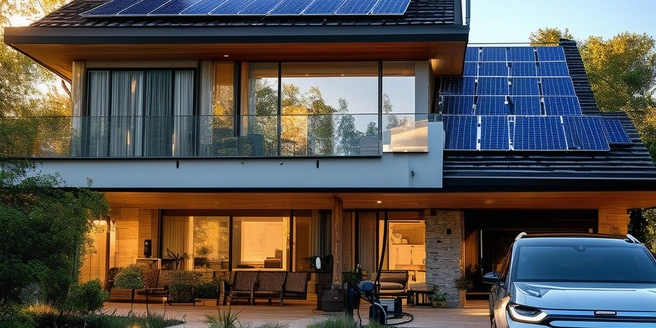
A pervasive misunderstanding in this domain is the belief that installing high-efficiency solar arrays automatically resolves consumption spikes. While photovoltaic generation is a vital component, solar installations without sophisticated battery energy storage systems (BESS) or intelligent load management do little to mitigate the impacts of severe utility rate structures. Many commercial and high-tier residential utility tariffs impose punishing peak-demand charges based on the single highest 15-minute consumption window of the billing cycle. If an estate simultaneously runs commercial laundry facilities, charges multiple electric vehicles, and fires up large pool chillers during peak afternoon grid hours, the resulting demand charge can eclipse the cost of the actual kilowatt-hours consumed.
Furthermore, analyzing how to manage luxury estate energy costs involves recognizing the friction between architectural design choices and thermal performance. Vast expanses of floor-to-ceiling unshaded glass, high ceilings that induce severe thermal stratification, and sprawling single-story floor plans create massive heating and cooling loads. Without integrated architectural mitigation, mechanical systems must work continuously to overcome building envelope inefficiencies, rendering even the most advanced HVAC machinery ineffective against baseline thermal loss.
Deep Contextual Background
The trajectory of luxury estate energy consumption has undergone a radical transformation over the past half-century. Historically, grand estates were designed around passive environmental adaptation—thick masonry walls, deep overhangs, cross-ventilation corridors, and localized hearth heating. The mid-20th-century arrival of cheap, abundant fossil fuels and ubiquitous central air conditioning dismantled these design principles, ushering in an era of sealed glass envelopes completely reliant on mechanical conditioning regardless of local climate extremes.
As electricity grids expanded and energy prices remained relatively stable through the late 1900s, estate designers prioritized aesthetic scale and continuous indoor climate uniformity over energy efficiency. However, the contemporary landscape is defined by escalating electricity tariffs, grid instability, and aggressive decarbonization mandates. Utilities across affluent enclaves are rapidly phasing out flat-rate pricing in favor of complex time-of-use (TOU) schedules and dynamic peak pricing. This systemic shift has turned legacy architectural designs into financial hazards, forcing estate owners to retrofit multi-million-dollar compounds with industrial-grade energy management systems just to maintain baseline operational viability.
Conceptual Frameworks and Mental Models
Navigating the complexities of high-end energy management requires structured mental models that translate raw utility data into actionable engineering decisions.
1. The Baseload-to-Peak Ratio Model
Every estate operates on a foundational ratio between continuous baseload consumption (refrigeration, security servers, pool pumps, ventilation fans) and dynamic peak load (HVAC compressors, electric vehicle charging, catering kitchens). In luxury compounds, baseload is frequently three to four times higher than that of a standard residence. Effective management strategies focus first on compressing this baseload before attempting to offset variable peaks through generation.
2. The Thermal Envelope Hierarchy
This model prioritizes energy interventions based on thermodynamic return on investment.
-
Level 1: Air sealing and continuous exterior insulation (stopping conductive and convective heat transfer).
-
Level 2: Spectral window glazing and exterior shading (mitigating radiant solar heat gain).
-
Level 3: Mechanical system optimization (upgrading to variable-refrigerant flow heat pumps).
Owners frequently err by inverting this hierarchy—investing heavily in expensive geothermal mechanical systems while ignoring a leaky, uninsulated building envelope.
3. The Energy-Autonomy Continuum
Energy management exists on a spectrum from complete grid dependency to total off-grid islanding. True independence is rarely cost-effective for sprawling estates due to extreme weather peak loads. The optimal mental model treats the grid as an economic buffer rather than a lifeline, utilizing local battery storage to arbitrage utility rate fluctuations while retaining microgrid isolation capabilities for emergency resilience.
Key Categories or Variations of Energy Consumption Drivers
Luxury estate utility footprints are shaped by distinct functional categories. Each category presents unique trade-offs and requires targeted intervention strategies.
1. Climate Control and Variable-Speed HVAC Arrays
Spreading conditioned air across sprawling square footage requires multi-zone variable refrigerant flow (VRF) systems or closed-loop geothermal heat pumps. While geothermal systems offer exceptional long-term efficiency, their initial capital cost and complex subterranean loop requirements introduce significant civil engineering challenges.
2. Aquatic Infrastructure and Hydro-Thermal Loads
Swimming pools, heated spas, decorative water features, and koi ponds consume immense energy through constant water circulation, filtration, and thermal radiation. Uncovered outdoor pools experience rapid evaporative heat loss, forcing gas or electric heaters to run continuously.
3. Culinary, Hospitality, and Commercial Service Areas
Large estates frequently feature professional catering kitchens, commercial-grade refrigeration walk-ins, and industrial laundry facilities. These auxiliary spaces operate under commercial utility intensity profiles, generating high internal heat gains that place additional cooling demands on the primary HVAC infrastructure.
4. Specialized Preservation and Environmental Vaults
Fine art galleries, wine cellars, and vintage automobile showrooms require unyielding atmospheric control. Maintaining strict relative humidity (50% +/- 5%) and precise temperatures (55°F to 68°F) requires constant dehumidification and mechanical cooling, entirely decoupled from seasonal outdoor weather patterns.
5. Architectural Lighting, Entertainment, and Security Seams
Extensive perimeter security lighting, landscape illumination, architectural accent tracks, automated shading systems, and private screening rooms draw continuous phantom loads. Without centralized digital automation, these auxiliary systems operate inefficiently, wasting significant wattage across remote acreage.
6. Electric Vehicle Fleets and Heavy Auxiliary Charging
Modern estates routinely house fleets of high-capacity electric vehicles, private golf carts, and emergency backup generators. Unmanaged Level 2 or DC fast-charging stations installed in estate motor courts can instantly double a property’s peak electrical demand if permitted to draw power during high-rate utility windows.
Primary Energy Consumption Driver Comparison
| Driver Category | Typical Share of Total Load | Capital Intensity | Optimization Complexity | Optimal Mitigation Strategy |
| HVAC & Climate Control | 45% – 60% | High | High | Geothermal retrofits, zoned VRF, thermal envelope sealing |
| Pools & Water Features | 15% – 25% | Moderate | Low | Automated insulated pool covers, variable-speed pumps, solar thermal |
| Preservation & Vaults | 10% – 15% | High | High | Dedicated micro-HVAC zones, heat-recovery dehumidifiers |
| Auxiliary Kitchens & Laundry | 5% – 10% | Moderate | Low | Energy Star commercial upgrades, induction cooking, smart scheduling |
| Lighting & Security | 5% – 10% | Low to Moderate | Moderate | DALI digital lighting protocols, occupancy sensors, LED retrofits |
| EV Fleet Charging | Variable (5%–20%) | Moderate | High | Smart-charging controllers tied to BESS and off-peak tariffs |
Decision Logic for Estate Energy Auditing
When evaluating an estate’s energy profile, technical teams must follow a rigorous diagnostic sequence:
-
Granular Sub-Metering Installation: Deploy non-invasive, circuit-level power meters across all major electrical panels to isolate exact consumption spikes.
-
Infrared Thermographic Scanning: Execute thermal drone and interior scans to identify building envelope breaches, insulation gaps, and window seal failures.
-
Mechanical Efficiency Review: Inspect HVAC compressor coefficients of performance (COP) and verify that ductwork is free of thermal loss across unconditioned crawlspaces.
-
Tariff Analysis and Load Shifting Design: Evaluate current utility rate structures to determine if battery storage can eliminate peak-demand penalties through automated load shifting.
Detailed Real-World Scenarios
Analyzing hypothetical operational scenarios illustrates how abstract energy principles manifest in complex residential environments.
The California Coastal Estate Peak-Demand Penalty
-
Context: A sprawling 12,000-square-foot oceanfront estate features a large infinity pool, central air conditioning, and a multi-vehicle EV charging setup.
-
Constraints: The local utility enforces a strict time-of-use tariff with peak-demand charges between 4:00 PM and 9:00 PM, where electricity rates quadruple.
-
Decision Points: The estate manager runs the commercial pool pumps, charges three luxury electric vehicles, and cools the home during the peak 4-hour window, triggering a massive monthly demand penalty.
-
Failure Modes: Relying on simple automated timers rather than an integrated battery storage system that automatically isolates the estate from the grid during peak tariff windows.
-
Second-Order Effects: The monthly utility bill reaches $6,500 despite modest overall kilowatt-hour consumption. The owner installs a 100kWh commercial battery bank programmed to discharge during peak hours, reducing monthly demand charges by 70%.
The Mountain Geothermal Retrofit Failure
-
Context: A historic 15,000-square-foot mountain compound experiences extreme winter heating costs utilizing aging oil boilers and electric baseboard heaters.
-
Constraints: The estate sits on rocky, sloping terrain within a strict environmental preservation zone that limits heavy earth-moving equipment.
-
Decision Points: The engineering team attempts to install a vertical closed-loop geothermal system without conducting adequate bedrock thermal conductivity testing.
-
Failure Modes: Drilling encounters solid granite prematurely, driving drilling costs 300% over budget and forcing an abandonment of the geothermal loop design.
-
Second-Order Effects: The project pivots to an advanced air-source variable refrigerant flow (VRF) heat pump array backed by an industrial pellet biomass boiler, achieving 80% heating cost reduction while avoiding destructive bedrock excavation.
The Art Vault Humidity Management Crisis
-
Context: A private subterranean art gallery housing a multi-million-dollar painting collection suffers from chronic energy inefficiency due to poorly managed dehumidification.
-
Constraints: The local building code requires 100% outside air exchange for sub-grade archival spaces, pulling in hot, humid summer air that the HVAC system struggles to condition.
-
Decision Points: The facility manager runs dual commercial dehumidifiers continuously alongside the primary chiller, causing monthly electricity consumption to spike by 40%.
-
Failure Modes: Failing to incorporate an energy recovery ventilator (ERV) to pre-cool and pre-dehydrate incoming fresh air using exhausted indoor air.
-
Second-Order Effects: The installation of an enthalpy-wheel energy recovery ventilator cuts archival conditioning energy consumption in half while maintaining strict museum-grade humidity parameters.
Planning, Cost, and Resource Dynamics
Optimizing energy efficiency across a luxury compound requires significant upfront capital investment, specialized engineering resources, and careful financial modeling.
Direct Costs of Energy Engineering
Direct professional fees include energy auditing firms, mechanical engineers, structural building envelope consultants, and specialized electrical contractors. Hardware investments ranging from commercial battery storage units and smart microgrid controllers to high-efficiency heat pump compressors form the bulk of initial project expenditures.
Indirect Costs and Operational Continuity
Executing major energy retrofits within a fully occupied luxury estate introduces significant operational friction. Temporary displacement of residents, intrusive construction work within custom architectural finishes, and system downtime during cutovers require careful logistical coordination. Furthermore, failing to modernize energy systems locks the property into perpetually escalating utility overhead, representing a severe ongoing opportunity cost.
Energy Intervention Horizon and Cost Variability Spectrum
| Intervention Level | Direct Capital Investment | Typical Payback Horizon | Primary Risk Factor |
| Sub-Metering & BMS Tuning | $15,000 – $40,000 | 1 – 2 Years | Software integration friction with legacy hardware |
| Envelope Sealing & Glazing | $75,000 – $250,000 | 5 – 8 Years | Compromising historical or bespoke architecture |
| HVAC System Overhaul | $150,000 – $500,000 | 6 – 10 Years | Sizing miscalculations for extreme weather loads |
| Solar + BESS Microgrid | $300,000 – $1,200,000+ | 7 – 12 Years | Utility interconnection delays & code limits |
Tools, Strategies, and Support Systems
Executing a successful energy reduction strategy requires deploying enterprise-grade hardware and software platforms.
1. Enterprise Building Management Systems (BMS)
Unlike consumer smart-home hubs, commercial-grade BMS platforms integrate every mechanical subsystem—HVAC, lighting, shading, pool filtration, and ventilation into a centralized telemetry dashboard, enabling automated schedule optimization and predictive maintenance alerts.
2. Commercial Battery Energy Storage Systems (BESS)
Lithium-iron-phosphate (LFP) or advanced flow battery systems store excess solar generation or cheap off-grid utility power, discharging automatically during high-tariff windows to shield the estate from punishing demand charges.
3. Circuit-Level IoT Sub-Metering
Non-current-transducer (CT) power monitors clamped onto individual electrical breakers provide real-time, high-resolution data streams identifying phantom energy draws and failing compressor motors before they cause catastrophic outages.
4. Enthalpy-Controlled Ventilation Systems
Advanced ERVs monitor interior and exterior humidity and temperature gradients, intelligently modulating fresh-air intake to minimize thermal conditioning loads while maintaining pristine indoor air quality.
5. AI-Driven Predictive Load Forecasting
Machine learning software algorithms analyze weather forecasts, historical utility pricing, and estate occupancy schedules to pre-cool or pre-heat thermal masses during low-rate windows, minimizing runtime during peak grid hours.
6. Geothermal Loop Thermal Conductivity Testing
Before committing capital to subterranean heat pump arrays, specialized thermal response testing measures the actual heat dissipation capacity of the local geology, ensuring precise engineering sizing.
Risk Landscape and Failure Modes
Failing to manage estate energy infrastructure efficiently introduces severe financial, mechanical, and structural risks.
Compounding Failures and Asset Degradation
Energy management failures frequently compound across systems. For instance, attempting to seal a sprawling historic estate without upgrading ventilation can trap indoor moisture, leading to severe condensation within museum-grade art display walls. Simultaneously, running unmanaged high-draw electrical equipment without proper harmonic filtering can fry sensitive home automation microprocessors, resulting in expensive repair cascades.
Governance, Maintenance, and Long-Term Adaptation
Sustaining optimal energy performance requires institutional governance, moving far beyond reactive repair mentalities.
Continuous Monitoring and Quarterly Review Cycles
Estate operations teams must establish structured audit cycles, reviewing monthly utility analytics, sub-metering logs, and BMS error codes. Identifying minor efficiency drifts such as a pool pump running two hours longer than scheduled or a stuck HVAC damper prevents small anomalies from translating into thousands of dollars in wasted electricity.
Layered Maintenance Checklist for Estate Facilities
-
Quarterly HVAC Filter & Coil Inspection: Ensure heat exchange surfaces remain uninhibited by dust, pollen, or salt air corrosion (critical for coastal properties).
-
BESS Diagnostic Health Check: Verify cell balancing, inverter efficiency, and thermal management fluid levels within commercial battery banks.
-
Envelope & Weatherstripping Audit: Inspect exterior door seals, window gaskets, and automated shading linkage mechanisms ahead of seasonal temperature extremes.
-
Pool System Telemetry Review: Audit variable-speed pump flow rates, check solar thermal collector circulation loops, and verify automated valve positioning.
Measurement, Tracking, and Evaluation
Evaluating the true success of an energy management campaign requires tracking granular quantitative metrics alongside qualitative operational signals.
Leading vs. Lagging Indicators
-
Leading Indicators: Proactive metrics include real-time baseload wattage stability, inverter conversion efficiency, BMS predictive optimization frequency, and sub-metered anomaly detection rates.
-
Lagging Indicators: Reactive metrics include total monthly kilowatt-hour consumption, peak-demand surcharge totals, utility tariff penalty frequency, and annual mechanical repair expenditures.
Core Documentation Infrastructure
To maintain absolute oversight, estate management offices should maintain a centralized Energy Operations Ledger containing four foundational files:
-
The Comprehensive Utility Audit Suite: Historical utility bills, tariff rate schedules, and demand charge analyses spanning a minimum of 36 months.
-
The Mechanical Asset Inventory: Serial numbers, installation dates, maintenance logs, and rated coefficients of performance for all HVAC, pool, and generation hardware.
-
The BMS Telemetry Archive: Digital logs of historical temperature, humidity, and power draw metrics across all estate zones.
-
The Geothermal and Solar Engineering Dossier: Original geological soil reports, electrical interconnection agreements, and structural roof load certifications.
Common Misconceptions and Oversimplifications
Luxury real estate energy management is clouded by persistent myths that frequently result in wasted capital and unmitigated utility expenses.
- Myth 1: “Solar Panels Alone Eliminate Estate Utility Bills”
- Correction: Solar generation without battery storage and smart load management fails to protect properties against time-of-use peak demand charges, which often account for the majority of luxury utility bills.
- Myth 2: “Keeping the HVAC Running Constantly Uses Less Energy Than Cycling It”
- Correction: While maintaining a stable temperature is necessary for art and wine preservation, running standard residential climate control systems continuously in unoccupied wings wastes immense energy compared to intelligent zoned setbacks.
- Myth 3: “Geothermal Systems Require Zero Maintenance”
- Correction: While subterranean loops have long lifespans, the above-ground heat pumps, circulating pumps, and electronic control valves require rigorous, specialized maintenance to maintain peak efficiency.
- Myth 4: “Smart Thermostats Solve Sprawling Estate HVAC Inefficiencies”
- Correction: Consumer-grade smart thermostats are designed for standard residential duct layouts; they lack the multi-stage logic and telemetry required to manage commercial-grade VRF and geothermal arrays.
- Myth 5: “Thick Historic Walls Provide Sufficient Insulation Automatically”
- Correction: Solid masonry or stone walls possess very low thermal resistance (R-value). Without hidden internal insulation or specialized window treatments, historic estates suffer massive conductive heat loss.
Ethical, Practical, and Contextual Considerations
The management of high-net-worth estate energy consumption exists within a broader socio-environmental framework. Sprawling residential compounds draw immense electrical capacity from regional utility grids, occasionally straining local infrastructure during extreme heatwaves or winter storms. Deploying localized microgrids, high-capacity battery storage, and advanced solar generation not only insulates the property owner against rising utility costs but also relieves strain on public power grids, mitigating the community friction often associated with ultra-prime real estate developments.
Furthermore, integrating energy efficiency with architectural preservation requires delicate craftsmanship. Altering historic facades, adding exterior insulation, or mounting solar arrays on prominent rooflines must be executed with deep respect for the architectural integrity of the estate. True mastery in this domain lies in engineering invisible, high-performance efficiency systems that preserve the aesthetic legacy of the property while achieving absolute thermodynamic optimization.
Conclusion
Managing the complex thermodynamic profile of an elite residential compound requires transitioning from passive utility consumption to active, institutional-grade energy engineering. Treating utility bills as fixed operational overhead invites unnecessary financial drain and structural vulnerability. By systematically mapping energy drivers, upgrading thermal envelopes, deploying commercial-grade battery storage, and establishing rigorous continuous monitoring protocols, estate owners can achieve absolute operational resilience. Long-term success in luxury asset management rests not on accepting escalating utility burdens, but on mastering the physical and financial mechanics that govern the modern estate microgrid.